New Delhi, India | January 31, 2026
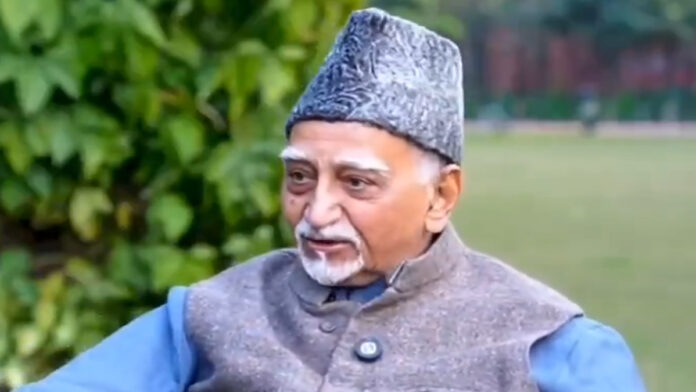
A fresh political and ideological controversy has erupted following remarks by former Vice President Hamid Ansari on historical figures traditionally described as invaders in Indian history. The comments have drawn strong criticism from the Vishva Hindu Parishad (VHP), with the organization accusing Ansari of distorting historical facts and hurting national sentiments.
What Did Hamid Ansari Say?
In a recent interview, Ansari stated that rulers often described as invaders—such as Mahmud of Ghazni and the Lodhi dynasty—should not necessarily be labeled as “foreigners.” He argued that politically it may be convenient to describe them as outsiders, but historically, they operated within the subcontinent and were more accurately described as local plunderers rather than foreign invaders.
His remarks quickly ignited debate across political and social platforms, with strong reactions from the ruling Bharatiya Janata Party and several Sangh-affiliated organizations.
VHP Leader Vinod Bansal’s Sharp Response
VHP national spokesperson Vinod Bansal responded strongly, questioning the intent and timing of Ansari’s statement.
Bansal alleged that Ansari’s comments amounted to the glorification of historical aggressors and said such views disrespect India’s cultural and civilizational legacy. He cited attacks on revered sites such as the Somnath Temple and the destruction of Nalanda University, attributing them to Mahmud of Ghazni.
He further questioned the rationale behind calling such figures “indigenous,” arguing that this narrative risks misleading future generations and weakening the understanding of historical realities.
Allegations of Political Bias
Bansal also suggested that Ansari’s remarks appeared politically motivated, hinting at ideological proximity to the Indian National Congress. According to the VHP leader, presenting controversial historical interpretations without broader academic consensus could deepen social divisions and polarize public discourse.
The VHP claimed that such statements have hurt Hindu sentiments and warned that selective reinterpretation of history could undermine social harmony.
Congress Responds, Debate Widens
The Congress party, meanwhile, has sought to contextualize Ansari’s remarks as an academic interpretation rather than an endorsement of historical actions. Party leaders have argued that history must be studied with nuance and scholarly rigor, rather than through political lenses.
Opposition parties, however, have accused Congress of defending what they term an “anti-national” narrative, further intensifying the debate.
History, Politics, and Public Sentiment
The controversy highlights a broader national debate over how Indian history is interpreted and presented, especially in a political climate where issues of identity, heritage, and nationalism play a central role.
Experts caution that while historical inquiry should remain open to reinterpretation, public figures must exercise responsibility, as their words carry significant influence over public perception and social cohesion.