New Delhi, India — June 4, 2026
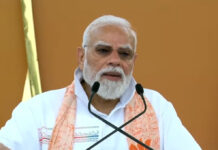
PM Modi Will Set Another Record on June 10, 2026, when Prime Minister Narendra Modi completes 4,399 consecutive days in office, surpassing the record held by India’s first Prime Minister, Jawaharlal Nehru. The milestone will make Modi the longest-serving democratically elected prime minister in India’s history in terms of uninterrupted tenure.
The achievement marks a significant moment in Indian political history and reflects more than a decade of continuous leadership since Modi first assumed office on May 26, 2014.
Modi Set to Surpass a 64-Year-Old Record
According to historical records, Jawaharlal Nehru took office as India’s first Prime Minister on May 13, 1952, following the country’s first general election. Nehru remained in office until his death on May 27, 1964, serving continuously for 4,398 days.
On June 10, 2026, Narendra Modi’s uninterrupted tenure will reach 4,399 days, exceeding Nehru’s record by one day and establishing a new benchmark in India’s democratic history.
The milestone comes less than a year after Modi surpassed the uninterrupted tenure record of former Prime Minister Indira Gandhi, who served continuously for 4,077 days between January 24, 1966, and March 24, 1977.
Two Leaders, Two Different Eras
While the comparison is based on tenure length, political analysts note that Nehru and Modi governed India during vastly different periods in the nation’s development.
Nehru led a newly independent nation facing the challenges of institution-building, economic planning and national integration. Modi, meanwhile, has governed a far larger and more complex India characterized by rapid technological advancement, a highly connected population and intense political competition.
When Nehru assumed office, India’s population stood at approximately 340 million. By the time Modi became prime minister in 2014, the population had crossed 1.3 billion and has since risen further.
Modern governance also operates under constant digital scrutiny, with social media platforms and 24-hour news coverage shaping public discourse and political accountability.
Political Competition Has Expanded Dramatically
India’s political landscape has changed significantly over the past seven decades.
During the first general election in 1951-52, approximately 53 political parties participated. The Indian National Congress won 364 of the 489 Lok Sabha seats, while the largest opposition party secured only a small number of seats.
In contrast, the 2014 general election saw participation from 464 political parties, while the 2024 election featured 744 parties. Today, more than 2,500 registered political parties exist across the country, reflecting a much more competitive political environment.
The electorate has also expanded dramatically, growing from roughly 170 million voters in the early years of the republic to more than 830 million eligible voters in recent elections.
Key Policies That Defined Modi’s Tenure
Political observers attribute much of Modi’s sustained electoral success to governance initiatives focused on welfare delivery, infrastructure development and digital transformation.
The government’s development philosophy, often summarized through the slogan “Sabka Saath, Sabka Vikas, Sabka Vishwas, Sabka Prayas” (Together with All, Development for All, Trust of All, Efforts by All), has been promoted as a model of inclusive governance.
Major policy initiatives during Modi’s tenure have included:
- Expansion of digital welfare programs
- Direct Benefit Transfer (DBT) schemes
- Infrastructure development projects
- Startup and entrepreneurship initiatives
- Food security programs
- Cultural heritage restoration projects
- Expansion of public services and connectivity
In foreign policy, India’s strategy of engaging multiple global partners has also become a defining feature of the Modi administration.
Economic Growth and Institutional Expansion
India’s economy has undergone substantial expansion since independence. Government data indicates that the country’s economic output has grown significantly over the decades, making India one of the world’s largest economies.
The period under Modi has also seen expansion in higher education and healthcare infrastructure.
According to official figures, the number of Indian Institutes of Technology (IITs) increased from 16 to 23 during his tenure. Similarly, the number of Indian Institutes of Management (IIMs) expanded from 13 to 21, while the number of All India Institutes of Medical Sciences (AIIMS) grew from seven to 23.
Supporters argue that these developments reflect a broader focus on strengthening educational and healthcare capacity across the country.
A Significant Political Milestone
As June 10 approaches, Modi’s record-setting tenure is expected to generate discussion among historians, political analysts and policymakers regarding leadership, governance and India’s democratic evolution.
Regardless of political perspectives, the milestone represents a notable chapter in the country’s political history, highlighting the changing nature of leadership and electoral politics in the world’s largest democracy.