New Delhi, India — February 17, 2026
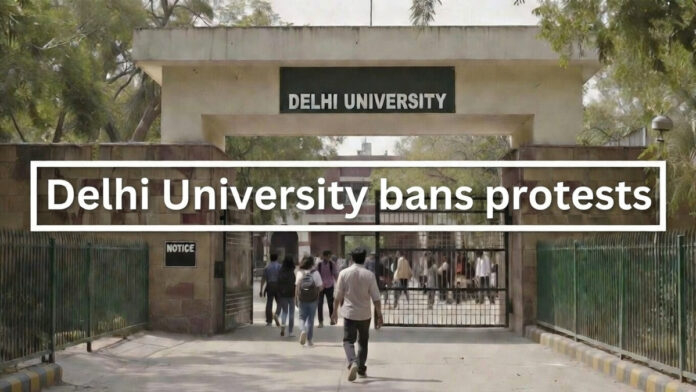
University of Delhi has imposed a one-month ban on protests, rallies, demonstrations, and public gatherings across its campus, citing concerns about public safety, traffic disruption, and law-and-order risks. The order came into effect February 17 and will remain in force for 30 days, according to an official notice issued by the university administration.
The directive was circulated by the university’s proctor, Prof. Manoj Kumar, to students, faculty members, and staff. It states that unrestricted public events or demonstrations could obstruct traffic flow, endanger public safety, and disturb peace within the campus.
Administration Cites Security Concerns
The notice references a prior directive dated December 26, 2025, issued by the Assistant Commissioner of Police for the Civil Lines subdivision, which cited a Home Ministry notification restricting activities that may disrupt public order or traffic movement within university premises.
Officials said previous protests had occasionally become difficult for organizers to control, contributing to disorder on campus. The administration maintained that the restriction is preventive and temporary, intended to ensure safety and maintain academic functioning.
Opposition From Faculty and Student Groups
The order has sparked criticism from several academic and student representatives.
Executive Council member Mithuraj Dhusiya argued that while demonstrations should remain peaceful, imposing a blanket ban on protests under the pretext of traffic concerns is “not acceptable” and raises questions about democratic rights within educational institutions.
Student organization All India Students Association also expressed concern. Its Delhi state secretary Abhigyan described the decision as “surprising and worrying,” claiming it could suppress student voices and discourage debate on campus issues.
Political Student Wing Reacts
The National Students’ Union of India condemned the order, calling it “authoritarian” and “anti-student.” The group’s national president Varun Choudhary said students raising concerns about equality, reservation policies, and academic regulations should not face restrictions on peaceful expression.
Background: Recent Campus Tensions
The decision follows recent disturbances at the North Campus. On February 12, a confrontation during a student event outside the Arts Faculty reportedly involved objects being thrown at a professor. The following day, protests related to university policy issues escalated into heated slogans and clashes, prompting police intervention and cross-complaints from both sides.
University Vice-Chancellor Yogesh Singh had earlier expressed concern over the incidents and condemned violence on campus.
What Happens Next
University authorities have not indicated whether the restriction could be extended beyond the initial month. Officials reiterated that any further decisions would depend on campus conditions and security assessments.
Meanwhile, student groups say they will continue to raise the issue through institutional channels, signaling that debate over protest rights and campus governance is likely to continue.