Washington, DC — February 8 , 2026
The United States has alleged that China secretly conducted nuclear explosion tests using advanced concealment techniques designed to avoid detection by international monitoring systems, raising fresh concerns about global nuclear stability.
The claims were made by Thomas G. Dinanno, who said Beijing used covert methods to ensure that global seismic monitoring networks failed to accurately register the tests.
⚛️ Alleged Test Date Linked to Galwan Clash
According to Dinanno, one such covert nuclear test allegedly took place on June 22, 2020—a date that has drawn particular attention because it occurred one week after the deadly Galwan Valley clash between Indian and Chinese forces along the Line of Actual Control.
The Galwan incident resulted in the deaths of 20 Indian soldiers, while intelligence assessments at the time suggested that more than 30 Chinese troops may also have been killed.
US officials have not released independent seismic data publicly but say the timing and method of the alleged test warrant serious international scrutiny.
🧪 ‘Decoupling’ Technique Explained
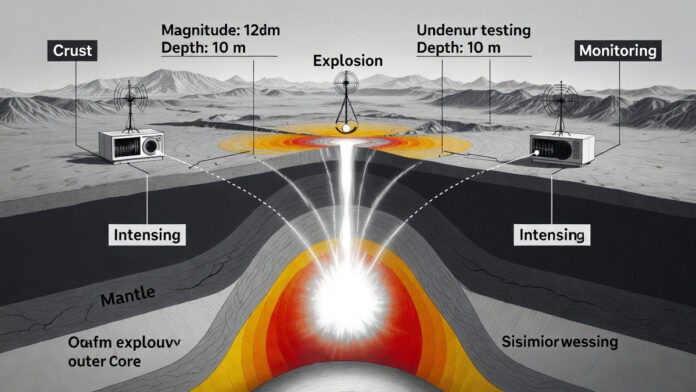
Dinanno stated that China used a technique known as “decoupling,” in which a nuclear explosion is conducted in a manner that significantly reduces seismic shockwaves.
By doing so, the blast becomes harder for international agencies to detect or accurately measure. According to US assessments, China has prepared for and potentially conducted nuclear tests with yields reaching hundreds of tons, while minimizing seismic signatures.
In a series of posts on X, Dinanno warned that such actions pose a serious global security risk, arguing that current arms control frameworks are ill-equipped to address modern testing methods.
📜 New START Treaty Under Strain
The US official also referenced the New START Treaty, signed in 2010 between the United States and Russia to limit deployed strategic nuclear weapons.
Dinanno said the treaty is likely to become irrelevant by 2026, citing:
Rapid expansion of China’s nuclear arsenal
Russia’s possession of weapons outside New START limits
The absence of any binding constraints on China’s nuclear forces
He noted that while most US nuclear weapons remained restricted under New START, the treaty had minimal or no impact on Russia and China, creating strategic imbalance.
🛡️ Call for a New Nuclear Framework
Dinanno argued that Washington must develop a new nuclear policy and international security architecture to protect US citizens and allied nations.
“The world has changed,” he said, emphasizing that Cold War–era agreements are no longer sufficient to manage today’s nuclear risks.
🗣️ Trump’s Earlier Warning
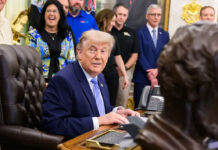
The statement comes amid renewed debate over nuclear testing. US President Donald Trump had previously signaled in October last year that the US could resume nuclear testing if Russia or China were found to be conducting tests—though he did not provide evidence at the time.
🌍 Diplomatic Efforts Face Resistance
The remarks come as Washington seeks to initiate new trilateral arms control talks involving the US, Russia, and China after the eventual expiration of New START.
However, China has so far declined to participate in any such negotiations, complicating efforts to establish new global limits on nuclear weapons.