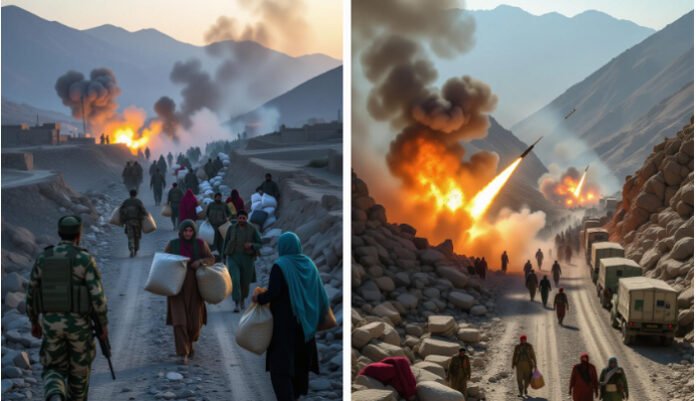
Tensions along the Pakistan-Afghanistan border have escalated dramatically as recent clashes between Afghan and Pakistani forces have resulted in dozens of reported casualties. Afghanistan claims that 58 Pakistani soldiers were killed in retaliatory strikes, while Pakistan confirms losses and accuses Afghan militants of cross-border attacks.
Eyewitnesses describe chaotic scenes with sporadic gunfire, artillery shells, and displaced villagers fleeing to safer areas. “We were forced to leave our homes in the middle of the night,” said Zoya Khan, a resident of Khost province. “The sound of explosions was terrifying. Children and the elderly suffered the most.”
Statements from Authorities
Afghanistan’s Ministry of Defense emphasized that the strikes were a defensive response to incursions. “Our forces acted to protect Afghan territory from repeated violations,” a spokesperson said. Pakistan’s military, on the other hand, called the attacks “unprovoked” and vowed to protect its borders.
International actors have voiced concern over the escalation. The United Nations urged both nations to exercise restraint, warning that continued violence could destabilize the region and trigger humanitarian crises.
Expert Analysis
Dr. Sameer Iqbal, a South Asia security analyst, noted, “These border clashes are symptomatic of longstanding tensions. Any miscalculation could ignite a wider conflict that impacts not just Pakistan and Afghanistan, but the entire region.” Analysts also highlight the role of militant groups operating along the porous border, complicating efforts to maintain peace.
Impact on Civilians
The human cost of the conflict is becoming increasingly evident. Villages near the border report temporary displacement, shortages of food and water, and disruptions to schooling. NGOs are rushing to provide aid, but insecurity hampers their operations. “We fear for our children,” said Abdul Rahim, a father from Nangarhar. “We hope the governments find a peaceful solution soon.”
Political Ramifications
The clashes have intensified domestic pressures on both governments. In Pakistan, opposition parties are demanding stronger border security measures, while in Afghanistan, President’s administration faces criticism for failing to prevent incursions. Regional observers warn that this tension could affect ongoing diplomatic efforts and humanitarian aid negotiations.
Voices from the Ground
Local Soldier: “Every day feels like a battle. We have to protect our families and villages, but the line between combatants and civilians is blurry.”
Village Elder: “This conflict is not ours. Yet, we live in fear of rockets and gunfire every night. Our pleas are being ignored.”
Looking Ahead
Experts suggest that sustained dialogue, confidence-building measures, and third-party mediation are essential to prevent further escalation. Both nations have agreed, under international pressure, to open communication channels, but trust remains low.