Washington, D.C. / Tehran — April 14, 2026
A high-stakes geopolitical confrontation is rapidly unfolding in the Strait of Hormuz, sending shockwaves across global energy markets and triggering sharp volatility in oil prices and equities.
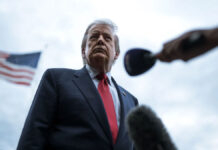
The United States, under Donald Trump, has moved to enforce sweeping naval restrictions targeting vessels linked to Iranian ports — a decision that has sparked immediate retaliation warnings from Tehran and rattled global markets.
Crisis Ignites in World’s Most Critical Oil Route
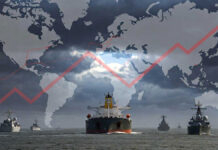
The Strait of Hormuz — through which nearly 20% of the world’s oil supply flows — has once again become the center of global tension.
According to United States Central Command, US naval forces are enforcing restrictions on ships connected to Iranian ports across the Arabian Gulf and Gulf of Oman.
While Washington maintains that non-Iran-linked vessels will not be blocked, the move has heightened fears of disruption in one of the world’s most vital energy corridors.
Iran Issues Stark Warning
Iran’s Revolutionary Guard has warned that any foreign military presence near the Strait would face a “firm and decisive response,” signaling the risk of direct confrontation.
Tehran has also rejected US claims, asserting its strategic influence over the waterway.
Oil Prices Swing as Markets React
Global oil markets reacted sharply to the escalating crisis, reflecting both panic and correction:
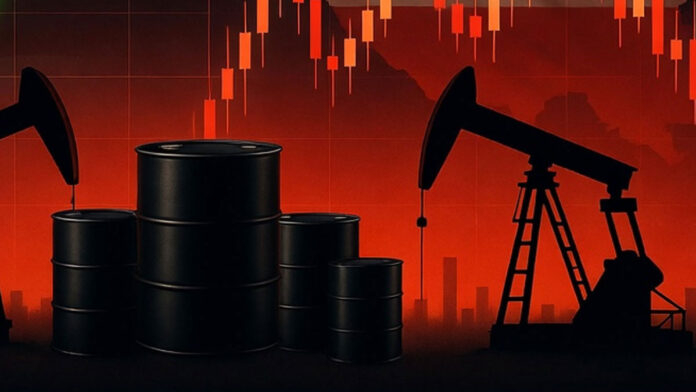
- Brent crude fell 2.2% to $97.20 per barrel
- US WTI crude dropped 2.2% to around $96.90 per barrel
The pullback comes after a dramatic surge, with oil prices jumping above $100 per barrel a day earlier, following President Trump’s order to block Iranian-linked shipments after failed weekend negotiations.
Analysts say the volatility highlights how sensitive energy markets are to developments in the Strait of Hormuz.
Asian Markets Rally Despite Tensions
Interestingly, equity markets in Asia showed resilience despite the geopolitical uncertainty:
- Japan’s Nikkei 225 rose 2.4%
- South Korea’s KOSPI surged over 3%
Market experts suggest that investors are balancing geopolitical risks with expectations of policy support and energy market adjustments.
Diplomatic Breakdown Fuels Escalation
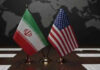
The crisis follows the collapse of US-Iran negotiations, reportedly held in Pakistan, where both sides failed to reach agreement on nuclear and strategic issues.
President Trump has taken a hardline stance, stating that the US will not allow Iran to benefit from maritime tolls or strategic leverage in the region.
He has also warned that vessels financially linked to Iran could face restrictions, further escalating tensions.
Global Stakes Reach Critical Point
With both sides holding firm, the situation is evolving into a potential global flashpoint.
Experts warn that continued escalation could:
- Push oil prices sharply higher again
- Disrupt global trade routes
- Fuel inflation worldwide
- Trigger broader geopolitical instability
For now, the world’s attention remains fixed on the Strait of Hormuz — where a regional standoff is rapidly turning into a global economic concern.