New Delhi — March 14, 2026
Laser hair removal has become increasingly popular among women seeking a long-term solution for unwanted hair. The treatment is often considered an easier alternative to frequent waxing or other painful hair removal methods.
The procedure uses laser technology to target hair follicles, helping reduce or slow down hair growth over time. While generally regarded as safe when performed by trained professionals, the treatment may sometimes cause certain side effects, making it important to understand the process and potential risks.
How Laser Hair Removal Works
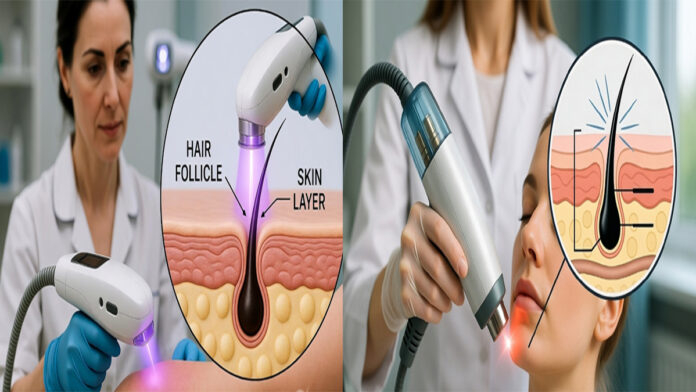
Laser hair removal works by directing concentrated laser energy toward hair follicles in the skin.
During the procedure:
A specialized laser device emits light energy.
The laser penetrates the skin and targets melanin (pigment) in the hair follicle.
The energy absorbed by the pigment damages the follicle.
This process slows or stops new hair growth over time.
Multiple sessions are usually required for optimal results because hair grows in different cycles.
Possible Side Effects of Laser Hair Removal
Although the treatment is widely used in cosmetic dermatology, some individuals may experience temporary side effects.
Skin Infection
Like other cosmetic procedures, laser hair removal may carry a risk of skin infection, especially if the treated area is not cared for properly afterward.
In rare cases, small wounds or irritation may appear on the skin. Experts advise not ignoring such symptoms and consulting a healthcare professional if signs of infection occur.
Redness and Irritation
One of the most common side effects is temporary redness, swelling, or irritation.
This reaction occurs because the laser damages the hair follicle, which can trigger the body’s natural response. The symptoms usually resemble the mild irritation that sometimes occurs after waxing.
These effects typically fade within a few hours. Applying an ice pack or rinsing the area with cool water may provide relief.
Changes in Skin Tone
In some cases, laser hair removal may lead to temporary changes in skin pigmentation.
The treated area may appear slightly lighter or darker than the surrounding skin. While this change is usually mild and temporary, it may be noticeable for some time.
Skin Crusting
Occasionally, the treated skin may develop small crust-like patches or dryness. This condition is generally temporary and can improve with proper skin care.
Using a gentle moisturizer may help reduce dryness and itching until the skin returns to normal.
Important Precautions Before and After Treatment
If you are considering laser hair removal for long-term hair reduction, experts recommend following certain precautions:
Always consult a qualified dermatologist or medical professional before undergoing the procedure.
Choose a reputable clinic or treatment center with experienced staff.
After treatment, avoid direct sunlight on the treated area.
Apply sunscreen regularly when going outdoors to protect the skin.
Proper care and professional supervision can help reduce risks and improve treatment results.