Brasília, Brazil | November 28, 2025 —
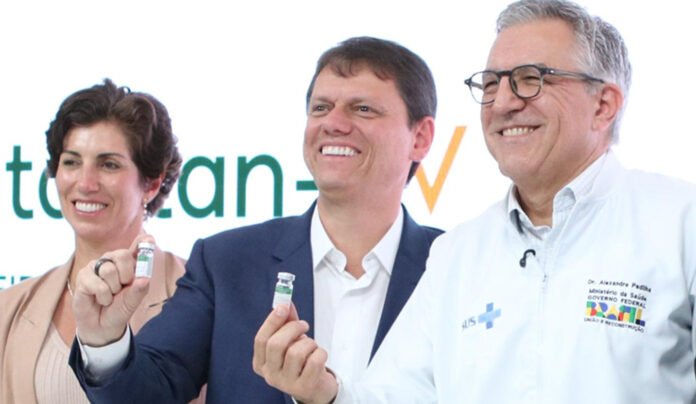
In a landmark medical advancement, Brazil’s national health regulator Anvisa has approved the world’s first single-dose dengue vaccine, Butantan-DV, developed by the renowned Butantan Institute in São Paulo. The decision comes as dengue infections surge globally, with the WHO reporting more than 6 million cases in 2025 alone.
Health Minister Nísia Trindade hailed the vaccine as “historic,” emphasizing its potential to revolutionize dengue prevention across tropical nations grappling with climate-driven outbreaks. Priced at $20 per dose, Butantan-DV offers 80% protection against all four major dengue serotypes (DENV-1 to DENV-4) for individuals aged 4 to 60—a major improvement over multi-dose vaccines such as Dengvaxia.
The vaccine is the result of over a decade of research led by scientists Dimas Covas and Esper Kallás, supported by $100 million in funding. Clinical trials on 10,000 participants indicated a 90% reduction in hospitalizations, a pivotal finding as dengue-linked deaths reached 7,000 last year, fueled by rising temperatures and El Niño–driven mosquito proliferation.
Brazil, which recorded nearly 5 million cases in 2025, plans to begin rollout in January 2026, prioritizing high-risk regions in the Amazon and Northeast. Authorities aim to produce 50 million doses annually, a scale expected to support future global exports.
While some experts have raised questions about the limited long-term data available, public health specialists—including Dr. Ana Maria de Brito—have praised the single-dose model as a “game changer,” particularly for low-income and remote regions where multi-dose vaccination programs face logistical hurdles.
The approval aligns with the Pan American Health Organization’s (PAHO) $500 million dengue initiative, a regional effort expected to significantly reduce the $8.9 billion in annual economic losses caused by the disease across Latin America.