Washington | May 24, 2026
World Bank Emergency Fund Requests Increase as Iran Conflict Intensifies Pressure on Global Economy
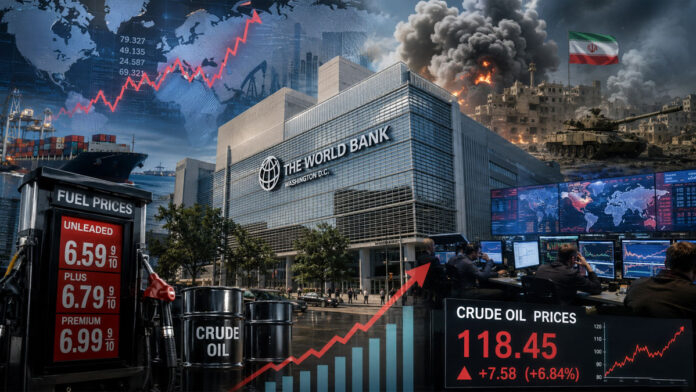
World Bank Emergency Fund Requests have sharply increased following the escalation of the Iran conflict, highlighting growing concerns over economic instability, rising energy prices, and supply chain disruptions across multiple regions.
According to a recent internal report cited by international financial sources, 27 countries have approached the World Bank seeking access to emergency financial support mechanisms after tensions in the Middle East triggered major volatility in global oil and gas markets.
The report states that these nations have begun activating systems that would allow them to quickly secure financial assistance from the World Bank during periods of economic stress. However, the identities of the countries and the total amount of requested funding were not disclosed in the document. The World Bank has also not publicly commented on the details of the report.
Middle East Conflict Triggers Global Economic Concerns
The rise in World Bank Emergency Fund Requests comes after geopolitical tensions escalated in the Middle East beginning February 28, increasing fears of prolonged economic disruption worldwide.
Global energy markets have faced intense pressure due to uncertainty surrounding oil and gas supplies linked to the regional conflict. Crude oil prices have experienced significant fluctuations, while transportation and manufacturing sectors in several countries continue to face higher operating costs.
The instability has also affected international supply chains, with disruptions reported across shipping, fuel distribution, and industrial production networks. Analysts warn that prolonged uncertainty in the region could further weaken economic recovery efforts in vulnerable economies.
In addition to energy concerns, fertilizer supplies have reportedly been impacted, creating new risks for agricultural production and food security in several developing nations.
Kenya and Iraq Confirm Financial Assistance Requests
Among the countries seeking urgent financial assistance, Kenya and Iraq have publicly confirmed that they requested rapid economic support from the World Bank.
Kenya is reportedly dealing with rapidly increasing gasoline and diesel prices, which are placing additional pressure on consumers and businesses already struggling with inflation and rising transportation costs.
Meanwhile, Iraq is facing financial difficulties linked to a sharp decline in oil-related revenues, despite being a major oil-producing nation. Falling export income and market instability have reportedly affected the country’s fiscal outlook.
The situation reflects broader concerns among emerging economies that remain highly dependent on stable energy markets and international financial support systems.
World Bank Crisis Support Mechanism Activated
The report indicates that the 27 countries requesting assistance are among 101 nations eligible to benefit from the World Bank’s pre-arranged crisis funding system.
Of those countries, 54 are already part of a rapid response financing program that allows governments to immediately access up to 10 percent of previously approved but unused funding during emergencies.
Financial experts say these mechanisms were designed to provide quick liquidity during global crises, including wars, natural disasters, commodity shocks, and severe economic downturns.
Since the conflict intensified, three countries have reportedly already received approval under newly introduced crisis support procedures, while others are still completing administrative requirements.
Oil Market Volatility Raises Global Inflation Risks
Economists continue to warn that prolonged instability in the Middle East could further accelerate inflation worldwide, especially through rising fuel and transportation costs.
Higher oil and gas prices often lead to increased costs across multiple sectors, including food production, aviation, logistics, and manufacturing. Developing economies are considered particularly vulnerable because many rely heavily on fuel imports and external financial assistance.
The recent surge in World Bank Emergency Fund Requests reflects growing fears that geopolitical tensions may evolve into a broader economic crisis if energy markets remain unstable for an extended period.
International financial institutions are now closely monitoring developments in the Middle East as governments attempt to stabilize domestic economies amid uncertainty surrounding energy supplies, inflation, and slowing global growth.
The World Bank and other major lenders are expected to continue coordinating with affected countries as the situation develops.