BEIRUT, Lebanon — June 1, 2026
West Asia Tensions Rise After Deadly Strikes in Southern Lebanon
West Asia Tensions continued to escalate on Sunday after at least eight people were reported killed in southern Lebanon amid ongoing cross-border hostilities. The developments have triggered renewed international concern, with Germany calling for immediate de-escalation and warning against further military expansion in the region.
The latest violence comes as diplomatic efforts struggle to contain growing instability across the Middle East, where multiple flashpoints continue to threaten regional security.
Eight Reportedly Killed in Southern Lebanon
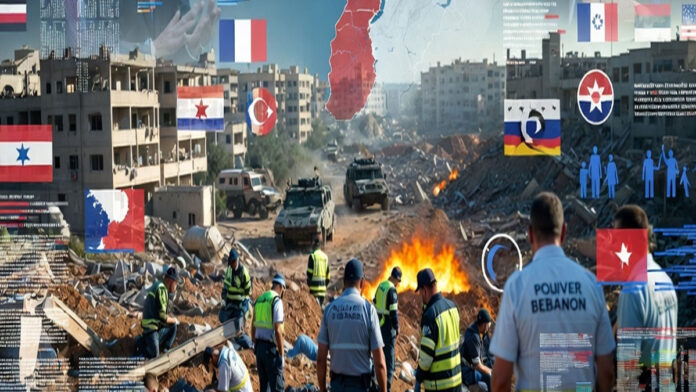
According to reports from Lebanon, at least eight people lost their lives in strikes in southern parts of the country. Among the fatalities were three women.
The incident marks another escalation in the ongoing conflict along the Israel-Lebanon border, where exchanges of fire and military operations have intensified in recent weeks.
Local authorities are continuing to assess the full extent of casualties and damage in the affected areas.
Germany Calls for Immediate Ceasefire
German Foreign Minister Johann Wadephul expressed deep concern over the expanding military operations in southern Lebanon and urged all parties to move toward an immediate ceasefire.
Wadephul stated that while Israel’s security concerns and responses to attacks from Hezbollah could be understood, any further military escalation risks worsening an already fragile situation.
He warned that additional military action could trigger a new wave of displacement within Lebanon and further destabilize the region.
The German minister also emphasized that long-term security cannot be achieved if civilian populations bear the consequences of prolonged conflict or if parts of Lebanon become permanently uninhabitable.
Israeli Military Reports Strategic Advances
The Israel Defense Forces (IDF) stated that its forces had advanced into areas of southern Lebanon, including the Beaufort Ridge and Wadi al-Saluki region.
Israeli military officials claimed that troops had secured positions around the strategically significant Beaufort Castle area, which overlooks key terrain in southern Lebanon.
The military described the operation as part of broader efforts aimed at addressing security threats originating from across the border.
Rocket and Missile Threats Continue
Israeli authorities also reported that rockets and missiles were launched from Lebanese territory toward northern Israel.
According to military officials, air defense systems intercepted the incoming projectiles before they reached populated areas.
The exchange underscores the continuing volatility along the border, where both sides have accused each other of escalating hostilities.
Arab League Condemns Escalation
The Arab League condemned the military actions in Lebanon and called for an immediate ceasefire.
Regional leaders have increasingly voiced concern that continued fighting could broaden the conflict and create additional humanitarian challenges across the Middle East.
The organization urged all parties to prioritize diplomatic solutions and avoid actions that could further destabilize the region.
United Kingdom Raises Diplomatic Concerns
The United Kingdom has also expressed concern regarding the latest developments.
British officials argued that continued military operations risk reducing opportunities for diplomatic engagement and negotiated solutions.
The comments reflect growing international pressure for restraint as governments seek to prevent the conflict from expanding into a wider regional confrontation.
Reports of Political Tensions in Iran
Meanwhile, separate reports from Iran have added another layer of uncertainty to the regional situation.
Speculation surrounding the possible resignation of Iranian President Masoud Pezeshkian sparked political debate and public discussion. However, Iranian state media denied reports suggesting that the president had submitted a resignation.
Media reports indicated that protests and disturbances occurred in parts of Tehran, with several individuals reportedly injured during the unrest.
Authorities have not announced any change in Iran’s political leadership, and official channels continue to reject claims regarding a presidential resignation.
Regional Situation Remains Fragile
Analysts warn that the combination of military activity in Lebanon, political uncertainty in Iran, and broader geopolitical tensions continues to create a highly volatile environment across West Asia.
Diplomatic efforts remain ongoing, but international observers caution that further escalation could have significant humanitarian, security, and economic consequences for the region.
For now, governments across Europe, the Middle East, and the wider international community are closely monitoring developments while urging restraint and renewed diplomatic engagement.