JERUSALEM — June 22, 2026
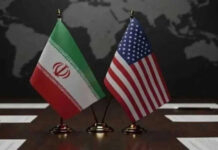
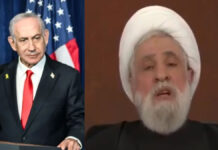
Netanyahu South Lebanon Iran nuclear statement set the tone for Israel’s latest security messaging on Monday as Prime Minister Benjamin Netanyahu declared that Israel would maintain its military presence in southern Lebanon and would not allow Iran to obtain a nuclear weapon under any circumstances. The remarks came at a delicate regional moment, with US-Iran talks continuing in Switzerland and growing scrutiny over whether diplomacy with Tehran could affect Israel’s military and strategic freedom of action.
Netanyahu’s comments reinforced two of Israel’s clearest red lines in the current Middle East crisis: preventing Hezbollah from rebuilding a threatening military posture near Israel’s northern frontier and ensuring that any diplomatic process involving Iran does not leave Tehran with a path to nuclear weapons capability. His message was delivered as Washington and Tehran pursue a fragile negotiating track, but it made clear that Israel does not intend to soften its security posture simply because talks are underway elsewhere.
Netanyahu Repeats Red Line on Iran’s Nuclear Program
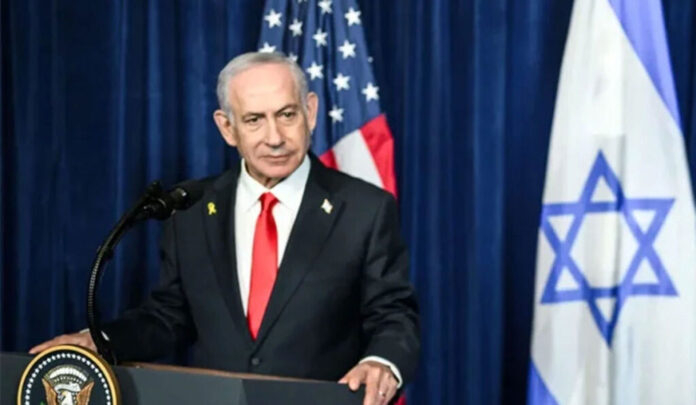
Speaking in Hebrew at a memorial event marking the 50th anniversary of the death of his brother, Yoni Netanyahu, the Israeli prime minister said that no diplomatic development would alter his government’s position on Iran’s nuclear ambitions. According to recent reporting, Netanyahu said Iran would not be allowed to acquire nuclear weapons “with or without an agreement,” underscoring that Israel’s position remains unchanged even as the United States explores diplomatic arrangements with Tehran.
That declaration is central to the Netanyahu South Lebanon Iran nuclear statement, because it places the Iran file above any immediate tactical diplomatic shift. Netanyahu’s position reflects a longstanding Israeli doctrine that Iran’s nuclear program is not simply a regional concern but an existential national-security threat. By tying the statement to his own tenure in office, Netanyahu also sought to personalize the pledge and frame it as a core test of leadership rather than just another policy talking point.
The Israeli prime minister has repeatedly argued that military pressure, intelligence operations, and strategic deterrence remain essential tools for preventing Iran from reaching nuclear weapons capability. His latest comments suggest Israel has no intention of outsourcing that objective to international negotiations or accepting a future agreement that, in Jerusalem’s view, leaves too much room for ambiguity.
Israel Signals It Will Stay in Southern Lebanon
Netanyahu also used the occasion to make clear that Israel does not intend to withdraw from its military positions in southern Lebanon in the near term. He said Israel would continue to hold what it describes as a security zone as long as necessary to protect northern Israeli communities and keep pressure on Hezbollah, the Iran-backed Lebanese armed group that remains one of Israel’s most immediate regional security concerns.
Recent reporting on Netanyahu’s public remarks indicates he has framed the deployment as a defensive necessity rather than a temporary wartime measure. He has argued that Israel must preserve operational freedom in Lebanon and retain a buffer against future cross-border attacks. Similar comments have also been echoed by Israeli officials in recent days, reinforcing the message that a withdrawal is not currently on the table.
That position matters because it places Israel’s military calculations on a separate track from the ongoing US-Iran diplomacy. Even if Washington and Tehran continue moving toward a broader understanding on sanctions, regional de-escalation, or nuclear restrictions, Netanyahu is signaling that Israel’s Lebanon posture will be determined by its own security assessment—not by diplomatic timelines negotiated elsewhere.
Why the Timing of Netanyahu’s Statement Matters
The statement comes as the United States and Iran continue high-stakes talks in Switzerland, where mediators are trying to keep alive a framework aimed at reducing regional tensions and opening a path toward a broader arrangement on Iran’s nuclear program and regional influence. Those talks have already been strained by public threats, disagreements over Hezbollah, and uncertainty over how any agreement would be implemented.
Against that backdrop, the Netanyahu South Lebanon Iran nuclear statement appears designed not only for domestic audiences, but also for Washington, Tehran, and regional actors watching closely for signs of Israeli flexibility. Netanyahu’s message is effectively that Israel reserves the right to continue acting against Hezbollah and against Iranian-linked threats regardless of whether diplomacy progresses.
That is particularly important because one of Israel’s long-standing concerns has been that international agreements with Iran may focus too narrowly on nuclear restrictions while failing to address Tehran’s support for armed regional proxies, missile capabilities, and military entrenchment across the Middle East. By pairing Lebanon and Iran in the same public message, Netanyahu was reinforcing the idea that Israel sees these fronts as interconnected.
A Memorial Event With Strategic Overtones
Netanyahu delivered the remarks during a memorial event for Yoni Netanyahu, his brother who was killed while commanding an elite Israeli unit during the 1976 Entebbe rescue operation. The setting gave the speech a broader symbolic frame, linking Israel’s current security challenges with a longer national narrative of sacrifice, military resolve, and strategic self-reliance.
In invoking his brother’s memory, Netanyahu cast his current security stance as part of a personal and national mission. He said he had dedicated his life to protecting Israel’s essential interests and made clear that the country would not retreat from that responsibility. That framing allowed him to position the speech not only as a comment on current events, but as a statement of continuity between Israel’s past security doctrine and its present-day regional posture.
For Netanyahu politically, that matters as well. At a time when his leadership continues to be tested by war, diplomacy, coalition pressure, and international scrutiny, memorial-stage rhetoric offers a way to connect present policy choices with deeper themes of national survival and duty.
What Israel Is Signaling to the US and Iran
The Netanyahu South Lebanon Iran nuclear statement also serves as a diplomatic signal. To the United States, it is a reminder that Israel does not necessarily consider itself bound by the logic or pace of US-led negotiations with Iran. To Tehran, it is a warning that military pressure on Hezbollah and opposition to Iran’s nuclear ambitions will continue even if a broader diplomatic framework takes shape.
That could complicate the diplomatic landscape in the weeks ahead. If Washington and Tehran move closer to an interim or longer-term understanding, Israel’s willingness to preserve military pressure in Lebanon and maintain an uncompromising stance on Iran’s nuclear program could become a major variable in whether regional de-escalation holds. Israeli leaders have long argued that diplomacy without enforcement creates space for adversaries to regroup, while critics of Israel’s approach warn that military escalation can undercut negotiations before they have a chance to mature.
Netanyahu’s message suggests that, from Israel’s perspective, the risks of restraint are greater than the risks of continued military pressure.
Southern Lebanon and Hezbollah Remain at the Center of Israel’s Security Calculus
Israel’s insistence on staying in southern Lebanon reflects how deeply Hezbollah remains embedded in Israeli strategic thinking. For years, Israeli officials have described Hezbollah’s missile arsenal, cross-border infrastructure, and ties to Iran as one of the country’s most immediate and dangerous threats. The current conflict has only reinforced that view.
By maintaining troops in the area, Israel is trying to ensure that Hezbollah cannot rapidly rebuild a forward threat posture close to Israeli communities. Netanyahu’s comments suggest that Jerusalem sees the military presence not as a temporary bargaining chip, but as part of a longer security architecture that could endure even if diplomatic agreements emerge elsewhere in the region.
That also explains why Netanyahu’s latest remarks did not sound like a narrow reaction to one round of talks in Switzerland. Instead, they sounded like an attempt to define the terms of Israel’s position for the next phase of the crisis: no retreat from pressure on Hezbollah, no concession on Iran’s nuclear ambitions, and no assumption that diplomacy alone can secure Israel’s borders.
A Clear Message Amid a Fluid Diplomatic Moment
Taken together, the remarks amount to one of Netanyahu’s clearest recent efforts to draw a line between diplomacy and deterrence. The Netanyahu South Lebanon Iran nuclear statement was not just a reaffirmation of familiar policy; it was also a warning that Israel intends to preserve unilateral freedom of action in a region where negotiations, ceasefire efforts, and military operations are unfolding simultaneously.
For now, Netanyahu’s position is unambiguous. Israel will keep its military footprint in southern Lebanon for as long as it believes necessary, continue pressuring Hezbollah, and maintain its long-standing vow to prevent Iran from becoming a nuclear-armed state. As US-Iran diplomacy continues in Switzerland, that posture is likely to remain one of the most important factors shaping the next phase of Middle East tensions.