BEIRUT — June 22, 2026
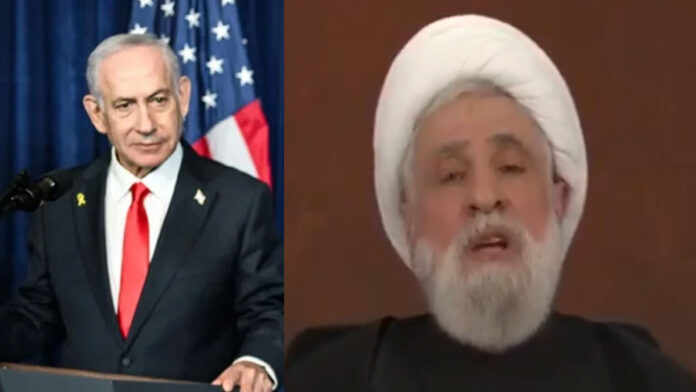
Hezbollah ceasefire rejection moved back to the center of Middle East diplomacy after Hezbollah leader Sheikh Naim Qassem said the group would not accept any truce arrangement that allows Israel to continue military operations in Lebanon, while also accusing the United States of backing Israel’s campaign and failing to achieve its wider strategic goals in the region.
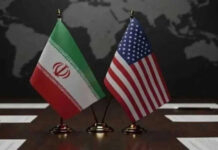
Qassem’s remarks come at a highly sensitive moment for the region, with US-Iran technical talks continuing in Switzerland and international mediators trying to keep alive a broader diplomatic framework aimed at easing tensions in Lebanon, the Strait of Hormuz, and the wider West Asian security landscape. But Hezbollah’s latest position makes clear that, from the group’s perspective, any ceasefire that does not include a total halt to Israeli military action and a full Israeli withdrawal from Lebanese territory is unacceptable.
Qassem Rejects Ceasefire Deals That Allow Continued Israeli Military Action
In comments delivered during an address to the Central Ashura Council, Qassem criticized ceasefire formulas that, in his view, effectively permit Israel to keep striking Lebanon while asking Hezbollah to stop fighting. He argued that such arrangements do not amount to a real ceasefire, but instead give Israel political cover to continue its campaign.
That position is broadly consistent with Hezbollah’s recent public messaging. Earlier this month, Qassem rejected a US-backed ceasefire proposal and said any truce must be “comprehensive,” including a complete halt to Israeli military operations and a full Israeli withdrawal from southern Lebanon. Reuters also reported over the weekend that Qassem said Hezbollah would respond to any Israeli violation, underscoring that the group does not view a ceasefire as a one-sided obligation.
According to Qassem, Hezbollah will not accept an agreement that leaves Israel free to continue attacking Lebanese territory by air, land, or sea. He argued that previous understandings had already been undermined by Israeli violations and said any future arrangement must include clear guarantees that all military action will stop.
What Hezbollah Says a ‘Real Ceasefire’ Must Include
Qassem laid out a more expansive definition of what Hezbollah considers a genuine ceasefire. He said a valid truce would require the complete suspension of military activity across all domains—air, land, and sea—along with an end to the destruction of infrastructure inside Lebanon and a full Israeli pullout from occupied Lebanese areas.
That mirrors demands Hezbollah has raised in recent weeks. Reporting from multiple outlets has shown the group insisting that any ceasefire must go beyond a temporary pause and instead establish a comprehensive halt to hostilities, combined with Israeli withdrawal and guarantees for Lebanese sovereignty.
For Hezbollah, this is not just about the wording of a truce document. It is about whether the ceasefire changes realities on the ground. Qassem’s message suggests Hezbollah sees little value in an arrangement that stops its own operations but leaves Israeli forces inside Lebanon and preserves Israel’s ability to strike what it says are Hezbollah-linked targets.
Hezbollah Accuses US of Backing Israel’s Lebanon Campaign
A central theme of Qassem’s speech was his accusation that the United States is directly enabling Israel’s military campaign in Lebanon. He said the scale and persistence of Israeli action would not have been possible without American political and strategic backing, and he argued that Washington remains the key outside power capable of forcing Israel to stop.
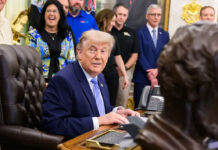
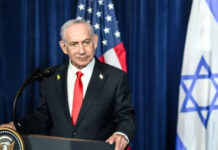
Qassem also pointed a finger at President Donald Trump, claiming that if Washington genuinely wanted the fighting to end, it could pressure Israeli Prime Minister Benjamin Netanyahu into halting military operations. In Hezbollah’s telling, the United States is not a neutral broker in the crisis but an active sponsor of Israel’s approach.
Those remarks land at a time when the US is simultaneously trying to broker wider de-escalation with Iran while preserving its support for Israel’s security posture. That dual role has become one of the biggest contradictions in current regional diplomacy: Washington wants progress on Lebanon and broader stability, but groups aligned with Iran continue to argue that the US is structurally aligned with Israel’s military objectives.
Qassem Says US-Israel Plan Against Iran and ‘Resistance’ Has Failed
Qassem also framed the current moment as a broader strategic defeat for the US-Israel project in the region. He claimed that efforts to weaken Iran and dismantle the so-called “resistance axis” had failed, despite the damage and losses suffered by Iran and allied groups.
That rhetoric aligns with Hezbollah’s recent line praising Tehran’s resilience. Qassem has previously described the US-Iran understanding as a sign of Iranian strength and has publicly thanked Iranian leaders for supporting Lebanon’s defense priorities. In his latest remarks, he argued that Iran had emerged from the latest phase of conflict stronger than its adversaries expected and would not surrender its regional role or strategic influence.
While those claims are political rather than independently verifiable assessments, they are important because they show how Hezbollah is positioning itself within the wider Iran-Israel-US confrontation. The group is presenting the Lebanon front not as a separate war, but as part of a larger regional contest over deterrence, influence, and the future balance of power.
Why the Statement Matters for Ongoing Diplomacy
The significance of the Hezbollah ceasefire rejection lies in its timing. The US and Iran are still engaged in talks that touch not only on Tehran’s nuclear program and sanctions relief, but also on conflict de-escalation in Lebanon and maritime tensions in the Gulf. Reports from the weekend suggested negotiators were trying to preserve a fragile process after an interim framework and follow-up technical discussions in Switzerland.
But Hezbollah is not a direct party to those talks, and Qassem’s remarks are a reminder that any diplomatic formula will struggle if key armed actors on the ground reject its terms. If Hezbollah refuses to recognize a truce that allows Israeli forces to remain active in Lebanon, then even a broader US-Iran understanding may not be enough to stabilize the Israel-Lebanon front.
That is why Qassem’s speech matters beyond rhetoric. It signals that one of the region’s most powerful non-state armed groups is still setting a very high bar for any ceasefire, and that Lebanon remains one of the biggest potential spoilers in the wider diplomatic process.
A Tough Road Ahead for Any Lebanon Truce
For now, Hezbollah’s position appears uncompromising: no partial ceasefire, no arrangement that gives Israel freedom to keep striking, and no political settlement that leaves Israeli troops inside Lebanese territory. Israel, meanwhile, has signaled it intends to maintain military pressure in southern Lebanon and preserve operational freedom against Hezbollah, making the gap between the two sides extremely wide.
That means the path to a durable Lebanon truce remains deeply uncertain. Even as diplomats continue to search for formulas that could reduce the risk of a wider regional war, the Hezbollah ceasefire rejection shows just how far the parties remain from a mutually acceptable endgame.
With the US, Iran, Israel, and Hezbollah all trying to shape the terms of the next phase, the latest speech from Qassem is a reminder that diplomacy may be moving forward—but not yet on terms that everyone is prepared to accept.