New York, United States — March 5, 2026
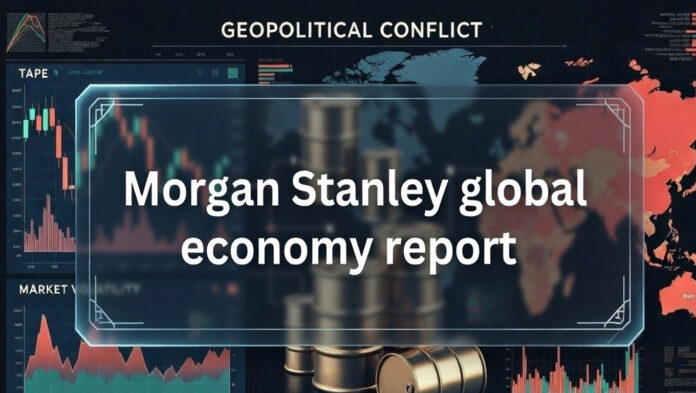
Rising tensions in West Asia could have significant implications for the global economy and financial markets, according to a new report by investment bank Morgan Stanley.
The report warns that if the ongoing conflict in the region continues for several weeks, it may lead to higher oil prices, rising inflation, and increased volatility in global markets.
Duration of the Conflict Seen as Key Factor
Morgan Stanley analysts said the length of the conflict will be the most critical factor in determining its economic impact.
If the confrontation remains limited and short-lived, the report suggests the global economic effects may remain manageable. However, a prolonged conflict could significantly disrupt energy markets and increase financial uncertainty.
Recent remarks from U.S. President Donald Trump indicate that the current military operations could last four to five weeks, raising concerns among market analysts about extended instability.
Oil Prices Could Influence Inflation
The report emphasizes that oil prices will play a major role in shaping inflation trends globally.
According to Morgan Stanley:
A 10% increase in oil prices caused by supply disruptions could raise U.S. consumer inflation by around 0.35% within three months.
Prolonged high energy prices could place sustained pressure on inflation levels.
Higher fuel costs can also affect consumer spending, as households may have to allocate more of their income to transportation and energy expenses.
Investors Turning to Safe-Haven Assets
During periods of geopolitical tension, investors typically shift toward safe-haven assets such as the U.S. dollar, which may strengthen under such conditions.
A stronger dollar could partially offset inflationary pressures by lowering the cost of imports. However, rising oil prices may still increase overall living costs.
Possible Impact on U.S. Domestic Politics
Morgan Stanley’s report also suggests that the conflict could influence domestic political debates in the United States, particularly ahead of upcoming midterm elections.
Inflation and the cost of living are already key political issues, and prolonged increases in fuel prices could intensify public and political discussions about economic policy.
Defense Spending May Increase
The report notes that rising geopolitical tensions could also lead to higher defense spending.
U.S. President Donald Trump has proposed a $1.5 trillion defense budget, which would represent roughly a 50% increase from current levels and mark the largest military spending level since the Korean War era.
Such a spending increase could add additional pressure to government debt and fiscal deficits.
Lessons From Previous Conflicts
Historical data suggests that financial markets sometimes recover quickly even during periods of conflict.
According to the report, following the Gulf Wars, stock markets recorded double-digit gains within three to six months, particularly in defense-sector companies.
However, if pressure on Iran continues and oil supply disruptions persist, energy prices could remain elevated for an extended period.
Impact on India’s Markets
The ongoing tensions are already affecting markets in India, where rising crude oil prices and geopolitical uncertainty have triggered volatility.
On Wednesday:
The BSE Sensex dropped 1,123 points (1.4%) to close at 79,116.
The Nifty 50 fell 385 points (1.6%) to 24,480.
Analysts suggest that sectors such as defense, security, aerospace, and industrial manufacturing could see increased investment opportunities in 2026 as governments expand spending in these areas.
Morgan Stanley concluded that geopolitical risks are increasingly becoming a permanent factor in global financial markets, requiring investors to factor regional conflicts and strategic competition into long-term investment strategies.