Brussels, Belgium — February 5, 2026
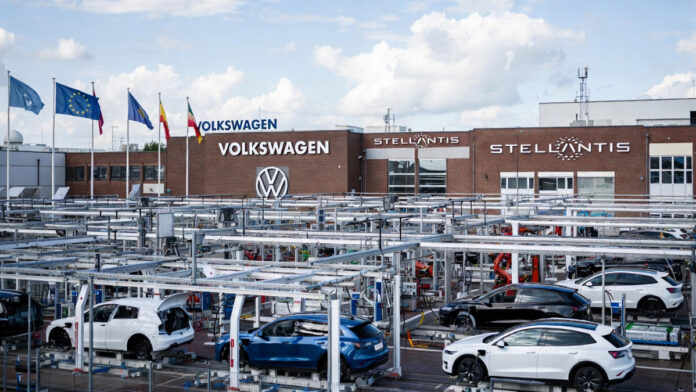
Europe’s two largest automakers, Volkswagen AG and Stellantis NV, have issued a public appeal to the European Union, warning that the continent’s automobile industry is under mounting threat from geopolitical tensions and intensifying competition from Chinese manufacturers.
The companies have called for urgent policy support to safeguard European carmakers, proposing incentives that favor locally manufactured vehicles as the region accelerates its transition to electric mobility.
Call for Carbon Bonus on Europe-Made Cars
In their appeal, Volkswagen and Stellantis suggested introducing a carbon dioxide bonus for vehicles manufactured within Europe. According to media reports, the proposal aims to encourage local production, protect jobs, and help automakers meet climate targets while maintaining industrial competitiveness.
Executives argue that rewarding lower-carbon, locally produced vehicles would strengthen Europe’s manufacturing base at a time when global competition is reshaping the auto sector.
Warning Over Geopolitical Competition
Stellantis executive Antonio Filosa and Volkswagen CEO Oliver Blume jointly cautioned that Europe is entering a new geopolitical era, where trade, technology, and industrial capacity are increasingly used to advance national interests.
They warned that without a clear strategic response, Europe risks falling behind rivals that are aggressively supporting domestic auto and EV industries.
Debate Intensifies Over ‘EU Preference’ Rules
The appeal comes amid growing debate over proposed “EU preference” rules for electric vehicles. Countries such as France have pushed for policies that prioritize “Made in Europe” EVs. However, divisions within the European Commission have delayed a final decision on the issue by at least a month.
The outcome of this debate is expected to have major implications for automakers’ investment and production strategies across the region.
Stellantis Flags High Cost of Electrification
Stellantis, the parent company of brands such as Fiat and Peugeot, has also criticized certain regulatory proposals from the European Commission, arguing that the cost burden of electrification remains extremely high for carmakers.
The company said the financial strain of transitioning to electric mobility cannot be overlooked, particularly as consumer demand for battery-electric vehicles shows signs of slowing in some markets.
Battery Manufacturing Dilemma in Europe
Executives from both companies highlighted challenges around EV battery cell manufacturing in Europe, describing it as a key example of the EU’s policy dilemma. While local battery production is essential for technological independence, consumers continue to demand affordable electric cars—often pushing manufacturers toward cheaper imported batteries.
Review of Battery Joint Ventures
Sources said Filosa is currently reviewing Stellantis’ global operations, including its battery partnerships. The company is reportedly considering scaling down or shutting some battery joint ventures, as softer demand for battery-electric vehicles raises questions over capacity and investment returns.