New Delhi, India — May 18, 2026
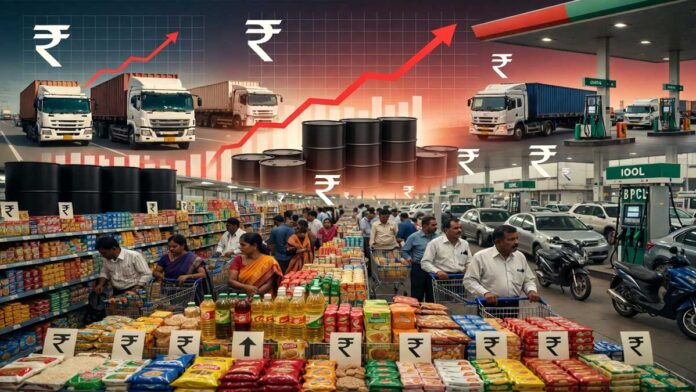
India’s fast-moving consumer goods (FMCG) sector is bracing for a fresh wave of inflation as rising crude oil prices and increasing transportation costs threaten to make essential household products significantly more expensive in the coming months.
Industry executives and market analysts say staples such as flour, pulses, packaged foods, and other everyday consumer products could soon witness price hikes as companies struggle to absorb mounting input and logistics expenses triggered by geopolitical tensions in the Middle East.
The latest concerns come as global crude oil prices continue to remain elevated, sharply increasing fuel and freight costs across supply chains and placing renewed pressure on corporate margins.
FMCG Companies Consider Price Hikes and Shrinkflation
Following recent fuel price revisions, several leading FMCG companies are reportedly evaluating a two-pronged strategy to manage rising operational costs.
According to industry sources, companies may either directly increase retail prices of select products or reduce product quantities while keeping package prices unchanged — a strategy commonly known as “shrinkflation.”
The approach allows companies to partially offset higher raw material and transportation expenses without causing an immediate pricing shock for consumers.
Executives believe this strategy may become increasingly common if crude oil prices remain elevated over multiple quarters.
Major FMCG Brands Signal Further Price Increases
Several leading consumer goods companies have already indicated during recent earnings calls that additional pricing action could become unavoidable if inflationary pressures continue.
Dabur India Global CEO Mohit Malhotra said the company has already increased prices across multiple product categories by nearly 4% and may consider another round of hikes if cost pressures intensify further.
Similarly, executives from Parle Products, Hindustan Unilever, Britannia Industries, and Nestlé acknowledged that volatility in crude oil prices remains a major concern for the industry.
Company officials said freight and logistics expenses are being monitored closely, but price hikes could become the last available option if inflation remains persistent.
Recovery in Consumer Demand Faces New Risks
The latest inflationary concerns come at a sensitive time for India’s consumption-driven economy.
Market demand had only recently begun recovering after previous cuts in Goods and Services Tax (GST) rates helped improve consumer sentiment and spending patterns over the past year.
Economists warn that prolonged high fuel prices could weaken this fragile recovery, especially in rural markets where consumers remain highly sensitive to even small increases in product prices.
Analysts say reduced pack sizes or higher retail prices may slow consumption growth in villages and semi-urban areas, potentially impacting broader economic momentum.
Rural Markets Could See Biggest Impact
Experts believe rural India may bear the brunt of the upcoming inflation cycle.
Households in rural regions typically allocate a larger share of their income toward essential goods, making them more vulnerable to rising food and household product costs.
A sustained increase in inflation could reduce discretionary spending, weaken purchasing power, and affect sales volumes for consumer goods companies.
Industry observers also warned that slowing rural demand could have wider implications for India’s economic growth outlook, as rural consumption remains a key driver of domestic economic activity.
With global crude oil prices remaining volatile and geopolitical uncertainty continuing in the Middle East, FMCG companies are expected to remain cautious while preparing for another round of inflation-led pricing adjustments in the months ahead.