CARACAS, Venezuela — June 25, 2026
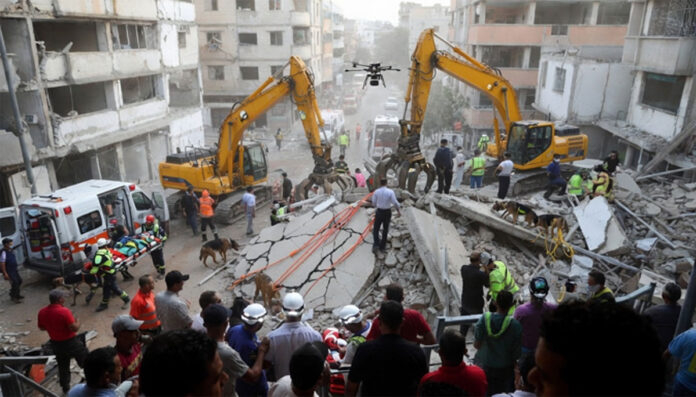
Venezuela earthquake disaster has once again underscored the devastating force of nature after two powerful earthquakes struck the South American nation, damaging buildings, disrupting daily life, and raising fears of heavy casualties. The back-to-back tremors, felt across parts of Venezuela and beyond, have revived global attention on some of the deadliest earthquakes ever recorded — disasters that left entire cities flattened, triggered tsunamis, and killed tens of thousands of people within minutes.
According to the U.S. Geological Survey, Venezuela was hit Wednesday evening by two major earthquakes near the country’s Caribbean coast. The first measured 7.1 on the Richter scale, followed 39 seconds later by a second, stronger quake of 7.5 magnitude. The epicenter was located west of Morón, roughly 168 kilometers from Caracas, at a shallow depth of around 13 kilometers, intensifying the shaking felt at the surface. Early reports showed collapsed structures and damage in parts of the capital and surrounding regions, while emergency crews moved in to assess the scale of the destruction. Tsunami alerts were briefly issued in parts of the Caribbean before some advisories were later revised. Official casualty figures were not immediately available, though authorities warned the human toll could be significant as rescue operations continued.
The destruction in Venezuela is the latest reminder that earthquakes remain among the world’s most lethal natural disasters, especially when they strike densely populated areas, occur at shallow depths, or trigger tsunamis and landslides. Over the past several centuries, multiple seismic catastrophes have changed the course of nations and left lasting scars on communities.
1. 1556 Shaanxi Earthquake, China
Often regarded as the deadliest earthquake in recorded history, the 1556 Shaanxi earthquake in China is estimated to have killed more than 800,000 people. Historical records suggest the devastation spread across a vast area, with many deaths linked to the collapse of cave dwellings where large numbers of people lived. Because it occurred centuries before modern seismology, the exact magnitude remains uncertain, but its death toll places it among history’s worst disasters.
2. 2004 Indian Ocean Earthquake and Tsunami
Among the deadliest modern disasters, the December 26, 2004 Indian Ocean earthquake remains one of the most catastrophic seismic events ever documented. The 9.1-magnitude undersea quake off the coast of Sumatra triggered a tsunami that devastated coastlines across Indonesia, Sri Lanka, India, Thailand, and several other countries. More than 230,000 people were killed across the region, making it one of the worst natural disasters of the 21st century. Entire communities were wiped out in a matter of hours as towering waves crashed ashore.
3. 2010 Haiti Earthquake
On January 12, 2010, a 7.0-magnitude earthquake struck near Port-au-Prince, Haiti’s capital, bringing down homes, hospitals, schools, and government buildings. The disaster overwhelmed an already fragile country and left hundreds of thousands displaced. Casualty estimates vary, but the quake is widely believed to have killed well over 100,000 people, with some counts placing the toll significantly higher. Haiti’s earthquake became a defining humanitarian crisis of the decade.
4. 2005 Kashmir Earthquake
The October 8, 2005 Kashmir earthquake, measured at 7.6 magnitude, devastated large parts of Pakistan-administered Kashmir and also affected areas in India, Afghanistan, Tajikistan, and China. The worst destruction was reported in Pakistan’s Khyber Pakhtunkhwa region and in mountainous communities where landslides blocked access to survivors. The disaster killed around 86,000 people and injured many more, with thousands of children among the victims after school buildings collapsed.
5. 2023 Türkiye-Syria Earthquakes
The twin earthquakes that hit Türkiye and Syria on February 6, 2023 rank among the deadliest disasters in recent memory. The first quake measured 7.8, followed by another powerful 7.5-magnitude tremor. The quakes destroyed entire neighborhoods, trapping families under rubble in freezing winter conditions. Across both countries, the death toll climbed to roughly 59,000, while millions were affected by displacement, infrastructure collapse, and prolonged humanitarian suffering.
6. 2011 Japan Earthquake and Tsunami
On March 11, 2011, a 9.0-magnitude earthquake off the coast of Japan triggered a massive tsunami that inundated towns and cities along the country’s northeastern coast. Official figures put the death toll at more than 18,000, with thousands still missing. Beyond the immediate destruction, the disaster also triggered the Fukushima nuclear crisis, making it one of the most consequential natural disasters in modern Japanese history.
7. 2015 Nepal Earthquake
Nepal was struck by a 7.8 to 8.1 magnitude earthquake on April 25, 2015, killing nearly 9,000 to 10,000 people and injuring tens of thousands. The quake flattened homes, temples, and historic landmarks in Kathmandu and surrounding districts, while avalanches on Mount Everest added to the tragedy. Tremors were felt across India, China, Bangladesh, and Pakistan, highlighting the regional scale of the disaster.
Why Earthquakes Turn So Deadly
The death toll from an earthquake often depends on more than just magnitude. A moderately strong quake can be catastrophic if it strikes near a city with weak infrastructure, while a stronger one in a remote area may cause less loss of life. Shallow depth, poor building standards, population density, aftershocks, weather conditions, and delayed emergency response can all dramatically worsen the impact.
That is why the Venezuela earthquake disaster is being watched so closely. With two powerful quakes striking within seconds of each other, structural damage can multiply quickly, leaving already weakened buildings vulnerable to collapse. Emergency agencies are still working to determine the full extent of the devastation, and the coming days will likely offer a clearer picture of the human and economic toll.
For now, the images emerging from Venezuela serve as a stark reminder of a recurring truth: earthquakes can strike without warning, and when they do, they can reshape lives, cities, and history in an instant.