KUWAIT CITY — June 25, 2026
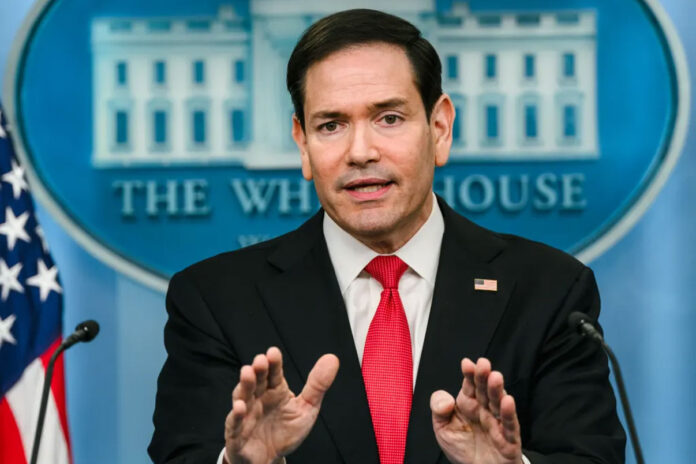
Marco Rubio Gulf allies Iran talks took center stage on Wednesday as U.S. Secretary of State Marco Rubio pledged that Washington would safeguard the interests and security of its Gulf partners while negotiating with Iran on a broader regional settlement after months of war and disruption across the Middle East.
Speaking during a visit to Kuwait City, Rubio said the United States would remain fully aligned with its longtime Gulf allies and would not pursue any arrangement with Tehran that undermines their security. His remarks came during a three-country Gulf tour aimed at reassuring regional partners uneasy about the Trump administration’s preliminary understanding with Iran and the broader shape of any post-war settlement.
“We’re going to be completely aligned with our partners in the Gulf,” Rubio told reporters in Kuwait. “We’re not going to do anything that undermines the security of our allies, our longstanding allies in the region,” he said, according to Reuters.
Gulf tour designed to calm allies after Iran deal concerns
Rubio is currently traveling through the United Arab Emirates, Kuwait, and Bahrain as part of the Trump administration’s diplomatic push to shore up support for its emerging Iran framework. Gulf Arab governments have broadly welcomed efforts to avoid a wider regional war, but many remain deeply skeptical of the terms of the recent U.S.-Iran understanding and fear that excessive concessions could embolden Tehran.
The accord reached last week between Washington and Tehran — described as the first signed by an American and Iranian president since Iran’s 1979 Islamic Revolution — reportedly includes a proposed $300 billion fund and the waiver of some sanctions on Iran. That has triggered concerns in Gulf capitals that fresh money and economic relief could strengthen Iran’s military and regional influence at a time when its missile capabilities and role in regional proxy conflicts remain unresolved.
Rubio’s trip is therefore as much about reassurance as it is about diplomacy. In addition to bilateral meetings, he is expected to engage with Gulf Cooperation Council partners on shared security priorities, maritime stability, and the future of talks with Tehran.
Why Gulf states remain wary of Iran
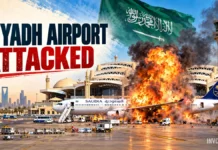
The anxiety among Gulf states is rooted in the recent war and the direct fallout they experienced during the conflict. Several Gulf countries were caught in the crossfire as Iran launched missile and drone attacks across the region, while shipping and energy flows were thrown into turmoil by Tehran’s actions around the Strait of Hormuz, one of the world’s most strategically important oil transit chokepoints.
The strait’s status has become one of the most sensitive issues in the current diplomacy. During the conflict, maritime traffic through Hormuz was heavily disrupted, sending shockwaves through global energy markets and raising alarm in oil- and gas-dependent economies. Iran has also projected confidence after the war, signaling that it does not intend to surrender leverage over the critical waterway as negotiations move forward.
Rubio has drawn a firm line on that issue, saying no country should be allowed to impose tolls or unilateral restrictions on international shipping through the Strait of Hormuz. The message is designed not only for Tehran, but also for Gulf capitals that want ironclad U.S. assurances that regional trade and energy routes will remain secure.
Washington says Gulf partners will shape the next phase of diplomacy
Rubio stressed in Kuwait that the United States and Gulf countries are moving in the same direction when it comes to finding a durable solution with Iran. While the political framework of a deal has been outlined, technical negotiations are still ongoing, and U.S. officials have said more talks are expected later this month, likely in Switzerland.
That next phase will be closely watched because many of the hardest questions remain unresolved, including enforcement mechanisms, sanctions relief, regional security guarantees, and how to handle Iran’s influence over flashpoints such as maritime access, missile activity, and regional armed groups.
Rubio has indicated that Washington remains open to a “real” agreement with Iran, but also warned that if diplomacy fails, President Donald Trump still has “options.” That formulation appears intended to balance negotiation with deterrence — reassuring Gulf states that the U.S. is not entering talks from a position of weakness.
Bigger test lies ahead for the US-Iran track
For Gulf leaders, the central question is whether any agreement with Tehran will genuinely reduce the threat of future conflict — or merely pause the crisis while leaving Iran stronger and the region more exposed. Rubio’s visit is an attempt to answer that concern directly by making clear that Gulf security will remain central to U.S. decision-making.
For Washington, the challenge is more complex. It must keep negotiations with Iran alive, avoid another regional war, and at the same time convince its Arab allies that diplomacy will not come at their expense. Rubio’s message in Kuwait suggests the administration understands that no lasting Iran deal will be politically sustainable unless Gulf partners believe their interests are not just being heard — but actively protected.