Washington & Tehran, January 25, 2026
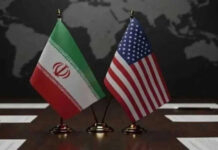
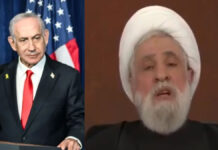
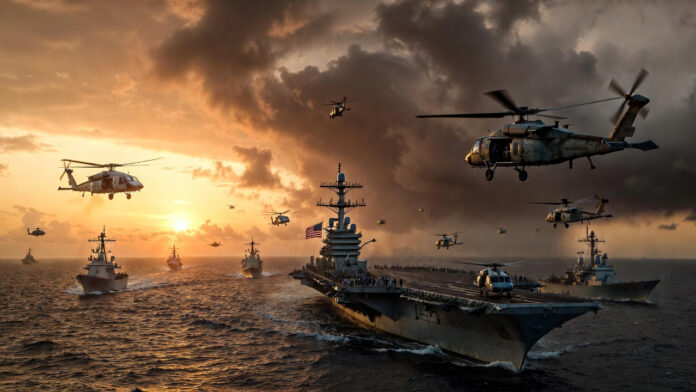
Tensions between Iran and the United States have surged to a new high, raising fears of broader conflict after Tehran warned it would consider any U.S. military strike as an “all-out war.” The escalation comes as a U.S. aircraft carrier strike group, led by the USS Abraham Lincoln, advances toward the Persian Gulf amid mounting geopolitical pressure and domestic unrest inside Iran.
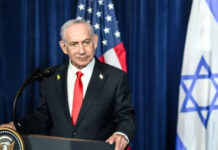
Iran’s stern warnings follow President Donald Trump’s announcement that a sizeable U.S. naval force — described by him as an “armada” — is being positioned in the region to deter perceived threats from Tehran. U.S. officials have said the movement of the carrier strike group is precautionary, but the Iranian leadership views it as a direct challenge to its sovereignty.
Iranian High-Alert Stance
Senior commanders of Iran’s Islamic Revolutionary Guard Corps (IRGC) publicly stated that they are “on high alert” and ready to respond. Tehran’s rhetoric emphasizes that any attack — limited or extensive — will be treated as an act of full-scale war, intensifying speculation about possible military confrontation.
While there has been no official U.S. declaration of war, Iranian officials’ warnings have fueled global concern about an unintended escalation, as international leaders call for restraint and diplomacy.
Impact on Civil Aviation and Travel
The heightened tensions have already disrupted global air travel. Multiple international carriers have rerouted or canceled flights across the Middle East due to safety concerns linked to the geopolitical uncertainty. Airlines including IndiGo, Air India, Lufthansa, KLM, and Air France have adjusted schedules, suspended some routes, or avoided airspace near Iran and Iraq.
In one example, India-based IndiGo announced cancellations on select international flights on January 25, citing regional instability as the reason for the precautionary suspension.
Broader Regional Responses
In addition to aviation shifts, governments in the Gulf region and beyond have expressed growing anxiety. The United Kingdom, for instance, announced the deployment of jet fighters to Qatar as tensions rise, reflecting broader international concern over the situation.
Analysts say the current standoff follows a broader backdrop of unrest inside Iran, including widespread protests and clashes with security forces — developments that have drawn global attention and criticism from the U.S. and other Western governments.
International Diplomacy and Conflict Risk
Despite the fiery rhetoric on both sides, diplomatic channels remain under pressure. Some regional partners have pushed for de-escalation, urging dialogue to prevent conflict. Nonetheless, the situation remains highly volatile, with military posturing and public warnings contributing to a tense regional atmosphere that could affect markets, oil prices, and security outlooks worldwide.