Vienna | March 2, 2026
Global oil markets are bracing for sharp volatility after OPEC+ announced a production increase even as military tensions escalate across West Asia. With concerns growing over supply disruptions, analysts warn crude prices could surge by as much as $20 to $50 per barrel if the conflict deepens.
The decision by the oil-producing alliance comes at a time when geopolitical uncertainty involving United States, Israel, and Iran has rattled energy markets worldwide.
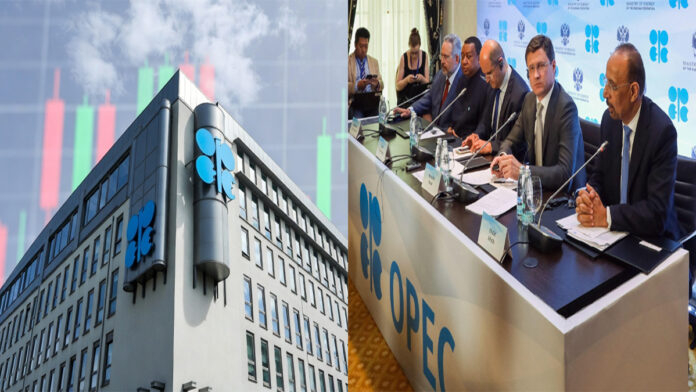
OPEC+ Announces Output Increase
The OPEC+ alliance said Sunday that eight member nations will raise crude production by 206,000 barrels per day starting in April.
The countries participating in the increase include:
Saudi Arabia
Russia
Iraq
United Arab Emirates
Kuwait
Kazakhstan
Algeria
Oman
While analysts had anticipated a modest production adjustment, the scale of the increase surprised some market observers given the ongoing regional instability.
Strait of Hormuz: The Key Risk Factor
Despite higher production, supply concerns remain centered on the strategically critical Strait of Hormuz.
Approximately 15 million barrels of oil pass through this narrow maritime corridor daily, accounting for nearly 20% of global oil supply. Any disruption to shipping lanes in the Gulf region could tighten global supply regardless of increased production levels.
Energy analysts emphasize that the core concern is not solely how much oil is being produced, but whether it can safely reach global markets. If vessel traffic is interrupted or insurance premiums spike due to security risks, price pressures could intensify quickly.
Iran Supply and China’s Exposure
Iran exports roughly 1.6 million barrels of oil per day, with a significant portion going to China. If Iranian exports are curtailed due to escalating conflict or sanctions-related complications, buyers may be forced to seek alternative supplies at higher prices.
Such shifts in purchasing patterns could further strain global inventories and drive up international benchmarks.
Brent crude closed Friday at $72.87 per barrel — its highest level in seven months. Market participants are closely watching Sunday night trading, where analysts expect immediate price reactions. Some forecasts suggest Brent could initially jump by $20 per barrel, with broader escalation potentially pushing prices significantly higher.
Production vs. Security: Market Uncertainty Remains
Energy experts caution that while OPEC+’s output increase may provide some buffer, it may not offset geopolitical risks tied to maritime security in the Gulf.
If tensions escalate further and shipping routes are disrupted, supply bottlenecks could outweigh production gains, amplifying price volatility across global markets.
For oil-importing nations, sustained price increases could translate into higher fuel costs, inflationary pressure, and economic strain.
As the situation evolves, traders and policymakers worldwide are monitoring both diplomatic developments and shipping activity in one of the world’s most critical energy corridors.