New Delhi, May 27, 2026
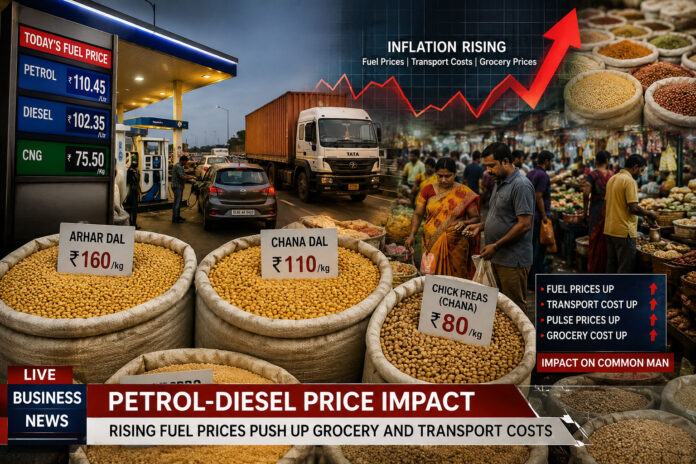
Petrol Diesel Price Impact is now becoming increasingly visible across Indian households as rising fuel prices, costly transportation, and surging pulse rates threaten to worsen inflation and strain kitchen budgets nationwide.
Consumers are already facing higher prices for essential commodities, and market experts warn that the cost of pulses such as chana and arhar could rise even further in the coming months. Concerns over weak imports, lower domestic arrivals, expensive logistics, and fears of a below-normal monsoon due to El Niño conditions have intensified inflationary pressure across the food supply chain.
The impact is no longer limited to fuel expenses alone. From groceries and vegetables to transportation and vehicle maintenance, the ripple effect of rising diesel and petrol prices is being felt across multiple sectors of the economy.
Why Pulse Prices Are Increasing in India
According to a report by the India Pulses and Grains Association, domestic supply pressure and declining imports are major reasons behind the recent surge in pulse prices.
The report noted that total pulse imports during the previous financial year declined sharply to 57.76 lakh tonnes, compared to 69.3 lakh tonnes in the earlier year. Imports of chana alone reportedly fell by nearly five lakh tonnes, while lentils and yellow peas also witnessed substantial declines.
Due to lower arrivals in wholesale markets and reduced international shipments, prices of key pulses have continued moving upward.
Market expert Vivek kumar stated that unfavorable weather conditions and fertilizer shortages could further increase prices in the coming months. Analysts believe that if monsoon conditions remain weak, domestic pulse production may face additional pressure during the kharif sowing season.
Pulse Prices Continue Rising Across Markets
Several major pulses have recorded noticeable price increases over the last month, adding pressure on household grocery budgets.
Old stock availability of arhar has reportedly declined significantly in mandis, while government procurement policies have also supported bullish market sentiment.
The government recently increased the Minimum Support Price (MSP) for arhar to ₹8,450 per quintal, strengthening expectations of further price increases.
Latest Pulse Price Changes
| Pulse Variety | April 25 Price | May 25 Price | Increase |
|---|---|---|---|
| Tur/Arhar (Solapur) | ₹7,800 | ₹8,050 | ₹250 |
| Masoor (Bina) | ₹6,350 | ₹6,600 | ₹250 |
| Yellow Peas | ₹4,200 | ₹4,500 | ₹300 |
| Urad | ₹7,950 | ₹8,250 | ₹300 |
| Desi Chana | ₹5,300 | ₹5,650 | ₹350 |
Experts warn that continued supply disruptions and adverse weather conditions could push prices even higher during the upcoming months.
El Niño Fears Raise Concerns Over Weak Monsoon
Another major factor affecting food inflation is growing concern regarding the monsoon season.
Weather experts have warned that El Niño conditions may result in below-normal rainfall this year. A weak monsoon could directly impact sowing activities for kharif crops, especially pulses like arhar.
Reduced rainfall can lower agricultural productivity, disrupt rural supply chains, and increase food inflation across categories including pulses, vegetables, and cereals.
Agricultural economists believe the market is already reacting to the possibility of lower crop output, leading traders and wholesalers to build precautionary inventories.
The fear of weaker production has also increased speculative buying in some agricultural commodities, further supporting higher prices.
Rising Diesel Prices Increase Transportation Costs
The transportation sector is also facing growing pressure due to rising diesel prices and fuel shortages in certain regions.
According to the All India Motor Transport Congress, nearly 20% of trucks in some states have reportedly gone off roads due to operational challenges and higher fuel expenses.
As a result, freight and logistics costs have increased by nearly 10% to 15%, directly impacting the prices of food products, grocery items, vegetables, and essential goods.
Higher transportation costs increase the final retail price consumers pay in local markets. Traders say the additional burden is gradually being passed on to consumers through higher prices on everyday products.
Industry observers warn that if fuel prices remain elevated, inflationary pressure on essential commodities could intensify further.
Tyre and Auto Component Prices Also Rise
The inflationary impact is now spreading into the automobile and transport equipment sectors as well.
Tyre manufacturers and vehicle component companies have already started increasing prices due to rising raw material and energy costs.
CEAT Managing Director Arnab Banerjee reportedly stated that the company raised tyre prices by nearly 5% during March and April and may implement another price hike during May and June.
Higher tyre and spare part prices increase vehicle operating expenses for transporters, adding another layer of cost pressure to logistics services.
Industry experts believe this could further raise freight charges in the coming months, affecting the overall supply chain and consumer pricing.
Middle-Class Households Face Growing Budget Pressure
The combined impact of rising fuel prices, expensive pulses, increasing transportation charges, and inflation in essential commodities is placing growing financial pressure on middle-class and lower-income households.
Consumers are already paying more for daily necessities, while food inflation remains one of the biggest concerns for families managing monthly household budgets.
Economists say inflation in essential commodities has a wider social impact because food and transportation account for a large portion of household spending in India.
If crude oil prices remain high globally and weather conditions worsen domestically, inflationary pressure may continue through the second half of the year.
Market Experts Expect Continued Volatility
Analysts believe the coming months will remain crucial for both consumers and policymakers.
The trajectory of fuel prices, global crude oil movements, monsoon performance, and agricultural production will largely determine inflation trends going forward.
Government intervention through imports, buffer stock management, and supply-chain stabilization measures may help moderate price increases, but experts caution that geopolitical uncertainties and climate-related risks continue to remain significant challenges.