Mumbai, May 27, 2026
Indian Stock Market Today witnessed a volatile start on Wednesday as investors reacted cautiously to rising geopolitical tensions following reported US military strikes on Iran. Benchmark equity indices opened in the red, reflecting global uncertainty and concerns over the potential impact on international peace negotiations and crude oil prices.
Despite early weakness in frontline indices, broader markets continued to show resilience, indicating selective investor confidence in domestic equities. Market participants closely tracked global developments while evaluating the possible consequences of escalating tensions in the Middle East on energy markets and global economic stability.
Sensex and Nifty Open Lower Amid Global Uncertainty
According to early market data on Wednesday, May 27, 2026, Indian equities traded under pressure during the opening session.
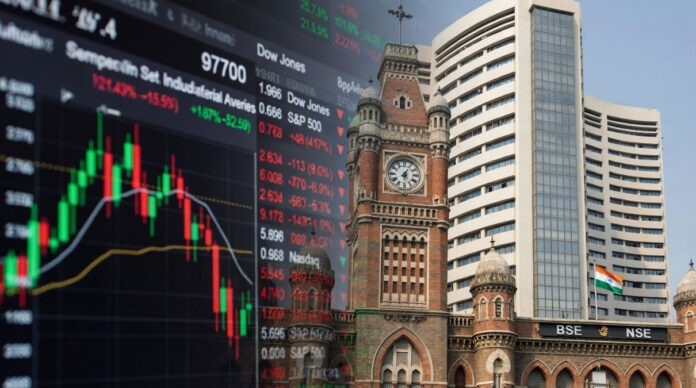
The BSE Sensex declined 479.26 points or 0.62% to trade at 76,009.70, while the NSE Nifty 50 slipped 118 points or 0.49% to hover around 23,913.70.
The weak opening came after investors turned cautious amid concerns that escalating geopolitical tensions between the United States and Iran could disrupt global financial stability and increase volatility across international markets.
Analysts noted that market sentiment remained fragile as traders monitored developments related to US-Iran diplomatic efforts and the broader impact on global energy supply chains.
HDFC Bank Shares Decline, Eternal Gains
Among individual stocks, banking heavyweight HDFC Bank emerged as one of the major laggards in early trade. The stock dropped nearly 2%, putting additional pressure on benchmark indices due to its heavyweight status in the financial sector.
On the other hand, shares of Eternal traded in positive territory and gained nearly 1%, offering limited support to broader market sentiment.
Market experts said investors continued to book profits in banking stocks after recent rallies while shifting focus toward selective sectors expected to benefit from domestic economic resilience.
Geopolitical Tensions Weigh on Investor Sentiment
The primary trigger behind Wednesday’s volatile market opening was growing uncertainty surrounding the geopolitical situation in the Middle East.
Investors reacted nervously after reports of US military action against Iran intensified fears of regional instability. Global markets are closely watching whether the tensions could affect ongoing diplomatic efforts or trigger disruptions in crude oil supplies.
Any sharp increase in oil prices could significantly impact emerging economies like India, which relies heavily on energy imports. Rising crude prices generally increase inflationary pressures, widen trade deficits, and affect corporate profitability.
As a result, traders adopted a cautious approach during the opening session, leading to selling pressure in key benchmark stocks.
Broader Markets Continue to Show Relative Strength
Despite weakness in benchmark indices, broader market segments performed comparatively better.
Mid-cap and small-cap stocks showed resilience in early trade as domestic investors continued focusing on sectors linked to consumption, manufacturing, infrastructure, and defense.
Analysts believe India’s strong domestic economic fundamentals, improving corporate earnings, and steady retail participation continue supporting broader market momentum even during periods of global volatility.
However, experts also warned that sustained geopolitical tensions and sharp fluctuations in crude oil prices could create short-term pressure across sectors.
Crude Oil Prices Remain Key Market Driver
Market strategists indicated that crude oil prices will remain one of the most important factors influencing investor sentiment in the coming sessions.
If tensions between the US and Iran escalate further, concerns over global energy supply disruptions could intensify. Such developments may increase volatility in global equity markets and impact foreign institutional investment flows into emerging markets.
For India, stable crude oil prices remain critical to maintaining inflation control and supporting economic growth.
Analysts said domestic equities may continue their gradual upward trend if oil prices remain contained and geopolitical risks do not escalate significantly.
Investors Expected to Stay Cautious
Financial experts expect investors to remain cautious in the near term as uncertainty surrounding global developments persists.
Mixed signals from ongoing US-Iran diplomatic discussions and fears of additional geopolitical disruptions may continue affecting short-term market direction.
Institutional investors are also expected to closely monitor global bond yields, currency movements, commodity prices, and central bank commentary before taking aggressive positions in equities.
At the same time, strong domestic macroeconomic indicators and stable corporate performance may help limit downside pressure in Indian markets.
Global Markets Also Under Pressure
Asian and global equity markets also reflected cautious sentiment amid fears of rising geopolitical instability.
International investors shifted focus toward safe-haven assets, including gold and government bonds, while equity markets experienced increased volatility.
Global energy markets remained highly sensitive to developments in the Middle East due to the region’s strategic importance in global oil production and shipping routes.
Any prolonged disruption could potentially affect worldwide inflation trends and economic recovery prospects.