TOKYO, JAPAN — May 15, 2026
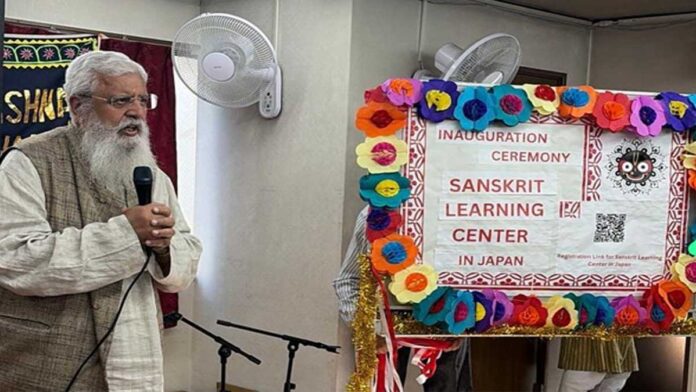
A major international initiative aimed at advancing Sanskrit studies, scientific research and global academic collaboration was launched in Tokyo with the inauguration of the “World Sanskrit Language Study and Research Institute.”
The new center was established jointly by Shri Jagannath Society Japan, Hindu Swayamsevak Sangh Japan and World Sanskrit Study Center.
Organizers described the initiative as an important step toward positioning Sanskrit not only as an ancient classical language but also as a future-oriented language for science, technology and global knowledge systems.
Sanskrit Highlighted as Language of Science and Artificial Intelligence
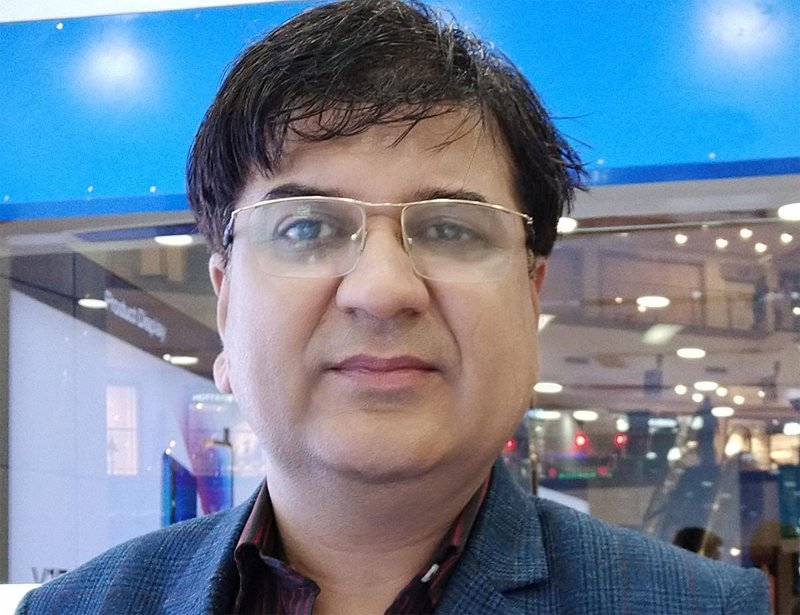
One of the central highlights of the event was an address by Dr. D.P. Sharma, who emphasized Sanskrit’s potential role in computational linguistics, artificial intelligence, robotics and advanced scientific research.
Speaking virtually during the program, Dr. Sharma said Sanskrit should not be viewed merely as a historical language, but as a structured and scientifically rich system capable of contributing to modern fields including mathematics, medicine, astronomy and AI research.
He stressed the need for evidence-based academic research to validate claims about Sanskrit’s scientific capabilities rather than relying on unverified narratives.
According to Dr. Sharma, Sanskrit’s syntactic precision, semantic depth and grammatical structure make it highly significant for future linguistic and computational studies.
Focus on AI and Large Language Models
Dr. Sharma also highlighted the importance of conducting dedicated research into Sanskrit within the rapidly evolving field of large language models and artificial intelligence platforms such as OpenAI’s ChatGPT, Gemini and DeepSeek.
He suggested that the development of a specialized Sanskrit-focused large language model could become a milestone in the history of linguistics and AI-driven language processing.
Dr. Sharma also referenced the grammatical system developed by ancient Sanskrit scholar Pāṇini, describing it as one of the world’s most logically structured linguistic frameworks.
Vedic Mathematics Compared to Modern Computing
During his speech, Dr. Sharma drew comparisons between Vedic mathematics and modern computer architecture.
He explained that many Vedic mathematical techniques rely heavily on additive structures, while modern computing systems often process subtraction, multiplication and division through complementary operations and bit-shifting methods.
He argued that Sanskrit’s logical and grammatical precision could potentially support future developments in algorithms, programming logic and artificial intelligence applications, although he emphasized the importance of rigorous academic research to establish such claims scientifically.
International Scholars and Cultural Leaders Attend Event
The Tokyo event brought together scholars, diplomats, educators and cultural representatives from multiple countries.
Representatives from the Embassy of India in Japan attended the event as chief guests.
The program began with an inaugural address by Pandit Munindra Panda, followed by a welcome speech from Gyanendra Mohan Mishra.
Key speakers included:
- Srinivas Varkhedi
- J. M. Mishra
- Dambarudhar Pati
Representatives from Hindu Swayamsevak Sangh Japan also addressed the gathering.
The cultural segment of the event featured an Odissi dance performance by Sachiko Ito.
Center to Offer Spoken Sanskrit and Research Programs
Organizers announced that the newly established institute will provide:
- Spoken Sanskrit classes
- Sanskrit language education
- Research opportunities
- Study programs focused on ancient Indian scriptures and philosophy
The center plans to use modern digital tools and practical teaching methods to promote Sanskrit education globally.
According to organizers, the institution’s mission is to make Sanskrit knowledge accessible worldwide through digital platforms while promoting the ideal of “Sa Vidya Ya Vimuktaye” — knowledge that liberates.
India-Japan Cultural Cooperation Highlighted
Dr. Sharma also emphasized the importance of stronger India-Japan cooperation in preserving ancient knowledge systems while connecting them with modern science and innovation.
Referring to the Sanskrit phrases “Vasudhaiva Kutumbakam” and “Aa No Bhadrah Kratavo Yantu Vishwatah,” he said such ideas remain highly relevant in today’s fragmented world.
He also referenced Prime Minister Narendra Modi’s G20 message of “One Earth, One Family, One Future” while discussing the role of Sanskrit in promoting global harmony and intercultural dialogue.
Sanskrit Seen as Bridge Between Ancient Wisdom and Future Technology
The launch of the institute is being viewed as a significant step toward positioning Sanskrit as a living resource for global cultural exchange, scientific inquiry and future technological innovation rather than only as a language of the past.
The event concluded with chants of “Sarve Bhavantu Sukhinah,” symbolizing peace, inclusivity and global well-being.