Tehran , Dubai , UAE — March 23, 2026
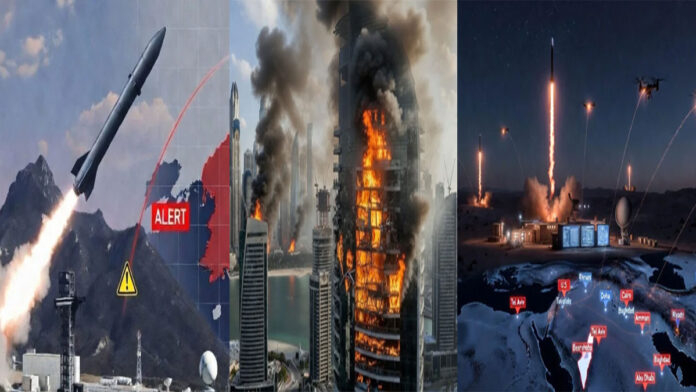
Iran has launched its 75th wave of missile strikes, sharply escalating tensions in the Middle East conflict involving Israel and the United States, while raising fears of a worsening global energy crisis.
Iran’s Islamic Revolutionary Guard Corps (IRGC) said the strikes were part of “Operation True Promise 4,” targeting Israeli sites and a US-linked military base in Saudi Arabia.
The escalation follows a reported ultimatum from U.S. President Donald Trump, who set a 48-hour deadline for reopening the Strait of Hormuz or facing potential strikes on Iranian infrastructure.
Iranian officials, including parliamentary leaders and IRGC commanders, warned of “irreversible damage” if attacked, listing critical regional infrastructure such as power stations, water facilities, and desalination plants as potential targets.
Meanwhile, Israel, led by Prime Minister Benjamin Netanyahu, carried out large-scale strikes in Tehran, with explosions reported across multiple areas. Israeli officials have also signaled the possibility of ground operations in Lebanon targeting Hezbollah positions.
Regional tensions extended further as Saudi Arabia reportedly intercepted missiles near Riyadh, while isolated incidents included minor injuries to civilians, including an Indian national affected by falling debris in Abu Dhabi.
Energy Markets and Global Impact
The geopolitical escalation has triggered sharp reactions in global markets.
- Brent crude surged near $113 per barrel, up significantly from pre-conflict levels
- WTI crude rose to around $98.66 per barrel
- Asian stock markets declined sharply, with major indices posting losses
- The Indian rupee hit a record low of 93.94 against the US dollar
The International Energy Agency (IEA) has warned that potential supply disruptions—estimated at up to 11 million barrels per day—could rival or exceed the oil shocks of the 1970s.
Rising Risk of Wider Conflict
Analysts warn that the situation could escalate into a broader regional conflict involving multiple countries, with significant implications for global trade, energy supply, and financial stability.
The Strait of Hormuz remains a critical chokepoint for global oil shipments, making any disruption highly sensitive for economies worldwide.
Impact on India
For India, the developments pose serious risks, including higher fuel prices, inflationary pressures, and currency volatility. As a major oil importer, India remains vulnerable to prolonged disruptions in global energy supply.
Market volatility in equities and currency also reflects growing investor caution amid the unfolding geopolitical crisis.