New Delhi, India — April 2, 2026
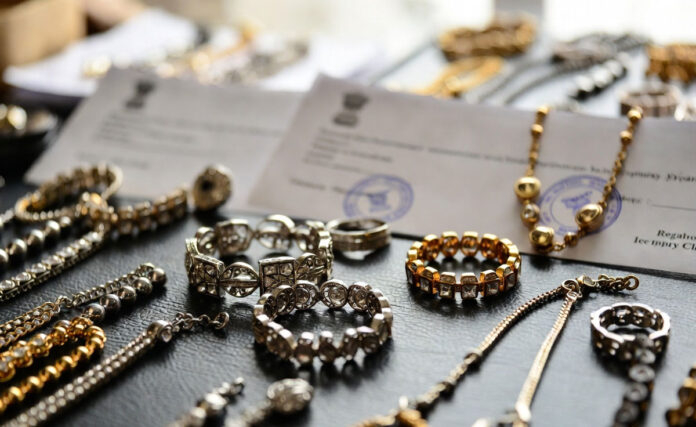
The Government of India has imposed immediate restrictions on the import of gold, silver, and platinum jewelry in a move aimed at curbing the misuse of free trade agreements (FTAs).
Under the revised policy, imports falling under Customs Tariff Heading 7113—covering jewelry made of precious metals—have been shifted from the “free” category to “restricted.” Importers will now be required to obtain prior approval or a license from the Directorate General of Foreign Trade (DGFT).
No Relaxation for Existing Contracts
According to the official notification, the new restrictions will apply regardless of any prior commitments, including existing contracts, irrevocable letters of credit, advance payments, or shipment status.
The government has also clarified that no transitional provisions or exemptions will be granted under earlier rules, making the policy immediately enforceable across all pending and future imports.
Imports Now Restricted Under Code 7113
The revised classification under Customs Tariff Heading 7113 includes:
- Gold jewelry
- Silver jewelry
- Platinum jewelry
All such imports will now require a DGFT license, marking a significant tightening of India’s import policy in the gems and jewelry sector.
Key Exemptions to the Rule
Despite the broad restriction, certain categories will remain exempt:
- 100% Export-Oriented Units (EOUs)
- Units located in Special Economic Zones (SEZs)
- Imports under specific export promotion schemes in the gems and jewelry sector
These exemptions are designed to ensure that export-driven businesses continue to operate without disruption.
FTA Misuse Triggered the Move
Officials indicated that some importers were exploiting the India-ASEAN Free Trade Agreement to bypass duties by importing jewelry under concessional terms.
This allowed traders to benefit from duty differentials and generate quick profits, particularly through imports from countries like Thailand under the guise of decorative jewelry.
An official noted that the new licensing requirement aims to curb such practices while ensuring genuine traders are not adversely impacted.
Policy Context and Earlier Restrictions
The latest move follows earlier government actions:
- Restrictions on certain platinum jewelry imports were imposed until April 2026
- Similar curbs on silver jewelry imports were implemented in September 2025 through March 2026
The current decision expands these controls into a broader regulatory framework targeting FTA misuse.
Industry Response
Industry stakeholders have urged the government to streamline the licensing process to minimize disruption for legitimate businesses.
Experts say the move could tighten compliance, reduce misuse of trade agreements, and improve transparency in the import ecosystem.
Conclusion
India’s decision to restrict imports of gold, silver, and platinum jewelry marks a decisive step toward preventing FTA misuse and strengthening trade oversight. While the move introduces stricter compliance requirements, it aims to create a more balanced and transparent trade environment.