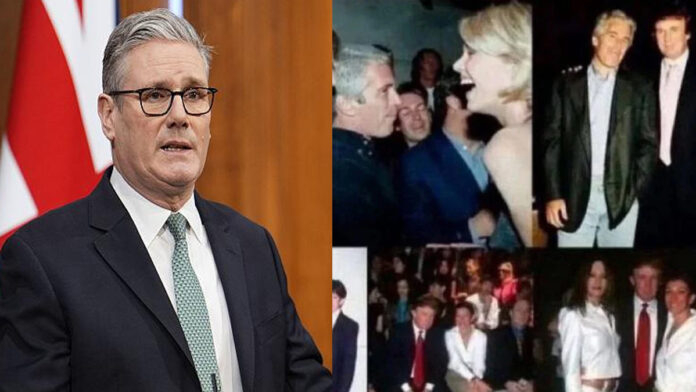
London, United Kingdom — February 2026
The fallout from the Epstein files has escalated into a full-blown political crisis in the United Kingdom, placing Prime Minister Keir Starmer under intense pressure from within his own Labour Party and from the opposition.
Following a series of revelations linking senior political figures to convicted US sex offender Jeffrey Epstein, calls for Starmer’s resignation have grown louder after two key members of his inner circle stepped down.
⚠️ Leadership Under Threat After Key Resignations
The crisis deepened after Morgan McSweeney, Starmer’s chief of staff and one of his closest advisers, resigned on Sunday. His exit followed mounting controversy over the government’s handling of past associations involving Peter Mandelson, a former senior diplomat and long-time Labour figure.
McSweeney publicly accepted responsibility for advising Starmer on Mandelson’s controversial appointment and said stepping aside was necessary to protect the government.
Earlier, another senior aide had also resigned, further destabilizing Starmer’s leadership.
🏛️ Mandelson Appointment at the Heart of the Crisis
The controversy stems from a 2024 decision by Starmer to appoint Mandelson to one of Britain’s most influential diplomatic roles despite prior knowledge of Mandelson’s past social ties to Epstein.
Although Mandelson has not been charged or accused of sexual misconduct, documents released in the United States suggest that he maintained contact with Epstein even after Epstein’s 2008 conviction involving a minor. UK media reports also claim Mandelson shared sensitive government information with Epstein more than a decade ago—allegations Mandelson has not accepted.
Starmer has since apologized for relying on what he described as misleading assurances, and promised to release all documents related to Mandelson’s appointment.
🗣️ Labour Party Divisions Deepen
Support for Starmer within Labour has weakened significantly. Senior MP Emily Thornberry said McSweeney had become “a controversial figure” and called for a fresh start within the party.
Opinion polls have added to Labour’s woes, showing the party trailing the far-right Reform UK in voter support—an alarming signal for party leadership.
🔥 Opposition Intensifies Attacks
Opposition Conservative Party leader Kemi Badenoch accused the government of making “reckless and deeply flawed decisions,” amplifying pressure on Starmer at a time when his authority is already under strain.
🧑🤝🧑 Closed-Door Meeting With Labour MPs
On Monday, Starmer held a closed-door meeting with Labour MPs in an attempt to shore up support. While details of the discussion have not been made public, party sources say Starmer emphasized that he has been in office for only 18 months and urged colleagues to allow him time to restore credibility.
Last week, Starmer issued a public apology for trusting Mandelson’s explanations and reiterated his commitment to transparency and accountability.
⚖️ Legal Context and Ongoing Scrutiny
The UK government maintains that upcoming document disclosures will clarify whether Mandelson misled officials about the extent of his Epstein-related contacts.
US court filings reportedly indicate that Mandelson may have shared sensitive information with Epstein years ago—an offense that could carry severe penalties if proven. However, no arrests or charges have been filed, and Mandelson faces no allegations of sexual wrongdoing.
🔮 What Happens Next
With public trust shaken, internal party dissent growing, and opposition attacks intensifying, Starmer faces a defining moment of his premiership. Political analysts say his survival will depend on:
Rebuilding confidence within Labour
Full transparency around disputed appointments
Containing further fallout from Epstein-related disclosures
For now, the Prime Minister remains in office—but his grip on power appears more fragile than at any point since taking office.