New Delhi, India — April 4, 2026
The Delhi government has unveiled a comprehensive Air Pollution Mitigation Action Plan 2026, introducing strict new rules to curb emissions in the national capital. Starting November 1, 2026, only BS-VI-compliant, CNG-powered, and electric goods vehicles will be allowed to enter Delhi.
The move is part of a broader strategy aimed at tackling the city’s persistent air pollution problem through a mix of regulatory enforcement, technology integration, and infrastructure upgrades.
Announcing the plan, Chief Minister Rekha Gupta said the government will strictly enforce a “No PUC, No Fuel” policy using advanced digital systems, including Automatic Number Plate Recognition (ANPR) cameras, to monitor vehicle compliance in real time.
Strict Entry Ban on Polluting Goods Vehicles
Under the new rules, non-essential and high-emission goods vehicles will be barred from entering Delhi. Only vehicles meeting cleaner fuel standards—BS-VI, CNG, or electric—will be permitted.
Officials confirmed that while similar restrictions were proposed earlier, they will now be implemented with full enforcement starting November 2026. A digital tracking system will be deployed to ensure compliance and prevent violations at entry points.
Massive Push for Electric Mobility
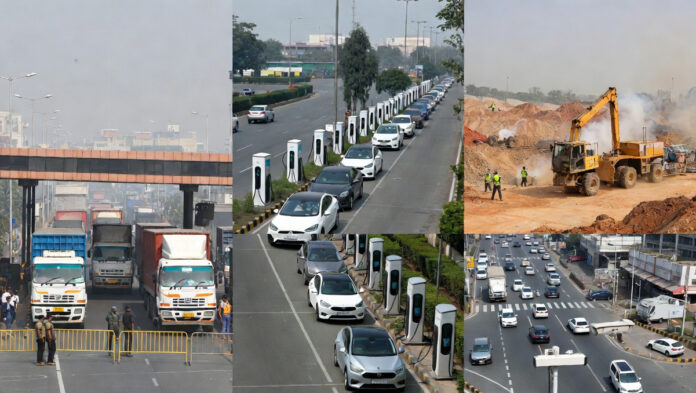
As part of its long-term vision, the government aims to transform Delhi into a leading EV hub. The plan includes installing approximately 32,000 new EV charging points across the city over the next four years.
Priority will be given to two-wheelers and commercial vehicles, while the public transport fleet will see a significant increase in electric buses. Authorities have set a target of 13,760 buses by 2029 to strengthen sustainable urban mobility.
Deadlines for Dust and Waste Management
The action plan also outlines strict deadlines for addressing dust pollution and landfill waste—two major contributors to Delhi’s air quality crisis.
- Okhla landfill: Targeted for complete clearance by July 2026
- Bhalswa landfill: Deadline set for December 2026
- Ghaziabad landfill: Expected completion by December 2027
In addition, authorities will expand the use of mechanical road sweepers and anti-smog guns to control dust levels across the city.
AI-Driven Monitoring and Smart Systems
To ensure effective implementation, the government will rely heavily on artificial intelligence and smart monitoring tools:
- C&D Portal 2.0: AI-enabled system to track dust emissions from construction sites
- ITMS: Intelligent Traffic Management Systems at 62 congestion hotspots
- Green War Room: Centralized command center for 24/7 monitoring of industrial emissions
Officials said these systems will enable real-time enforcement and data-driven decision-making.
Flexible Work Policies During Peak Pollution
The government is also considering adaptive measures such as staggered office timings and work-from-home policies during periods of severe pollution to reduce traffic congestion and emissions.
Chief Minister Rekha Gupta emphasized that the initiative is not merely a policy announcement but an enforcement-driven campaign backed by technology, infrastructure, and strict monitoring.
Conclusion
Delhi’s Pollution Action Plan 2026 represents one of the most aggressive efforts yet to tackle urban air pollution. By combining stricter vehicle norms, EV expansion, and AI-driven enforcement, authorities aim to deliver measurable improvements in air quality over the coming years.