TEHRAN — June 25, 2026
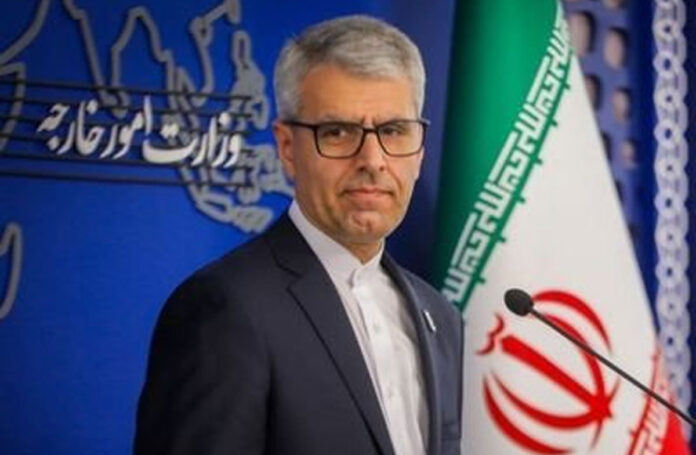
Iran says US militarism blocking peace in the Middle East, Foreign Ministry spokesman Esmail Baghaei declared on Thursday, escalating Tehran’s rhetoric against Washington as regional tensions remain high following months of conflict, fragile diplomacy, and growing scrutiny of U.S. military involvement across the region.
In a sharply worded post on X, Baghaei responded to a message from the U.S. State Department by arguing that lasting peace in West Asia will remain impossible as long as American intervention continues. He accused Washington of perpetuating instability through military power and political interference, and also linked the United States to Israel’s actions in the region.
“No one will be deceived by this,” Baghaei wrote, according to Iranian state-linked messaging and regional media reports. “As long as U.S. militarism and intervention continue, there can be no peace in our region.” He also alleged that Israel, which he referred to as Washington’s “occupying ally,” has been allowed to continue war, violence, and other abuses across the region with impunity.
Baghaei’s remarks come amid a fragile US-Iran diplomatic phase
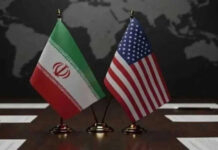
Baghaei’s comments land at a sensitive moment in the U.S.-Iran relationship, with both sides engaged in a broader diplomatic effort aimed at preventing a return to full-scale war after a period of direct military confrontation. In recent weeks, Washington and Tehran have been working through mediators on a framework intended to reduce hostilities and lay the groundwork for a wider regional arrangement. At the same time, both governments have continued to trade accusations in public, underscoring how fragile and politically fraught the process remains.
Baghaei has emerged as one of Tehran’s most vocal public messengers during this phase of the crisis. In multiple recent statements, he has accused the United States and its Western partners of hypocrisy, argued that U.S. actions have undermined diplomacy, and insisted that Iran will not compromise on what it describes as its core red lines in any final settlement.
Iran ties regional instability to US military footprint and Israel support
The latest statement reflects a longstanding Iranian position: that U.S. military deployments, sanctions, and strategic backing for Israel are central drivers of instability in the Middle East. Tehran has repeatedly argued that American support gives Israel freedom to carry out military operations across the region while shielding it from international accountability.
In his latest remarks, Baghaei broadened that critique by framing U.S. militarism and Israeli military action as inseparable. While the language was highly political, the message was consistent with recent Iranian efforts to present the region’s conflicts — from direct U.S.-Iran hostilities to Israeli military campaigns and maritime disruptions — as part of a single confrontation shaped by American power.
That framing also appears designed for both domestic and international audiences. At home, it reinforces the Iranian government’s narrative that Tehran is resisting external aggression rather than negotiating from weakness. Abroad, it positions Iran as a state demanding a new regional order in which U.S. influence is reduced and security arrangements are no longer centered on Washington.
Why the timing matters
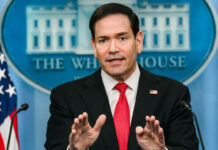
The timing of Baghaei’s post is significant because it comes just as U.S. officials are trying to reassure Gulf allies and keep diplomatic momentum alive after a volatile stretch of conflict. U.S. Secretary of State Marco Rubio has been touring Gulf capitals this week, pledging that Washington will protect the interests of its regional partners while continuing talks with Tehran over a longer-term solution. That outreach reflects anxiety among Gulf states that any U.S.-Iran understanding could leave them exposed to future pressure from Tehran, especially after disruptions involving missile attacks and tensions around the Strait of Hormuz.
Against that backdrop, Baghaei’s statement serves as a reminder that even as negotiations continue, Tehran is not softening its broader ideological and strategic critique of the United States. Instead, Iranian officials appear to be drawing a distinction between tactical diplomacy and long-term political positioning: they may negotiate with Washington when necessary, but they continue to cast the U.S. as a destabilizing force in the region.
A familiar message, but with fresh diplomatic consequences
Baghaei’s remarks are not an isolated outburst. Over the past month, he has used public statements and social media posts to criticize Western governments, reject what Iran sees as double standards, and defend Tehran’s own military posture as lawful self-defense. In one recent statement, he accused European officials of “selective moral outrage” after criticism of Iranian strikes on U.S. military assets in neighboring countries. In another, he said U.S. actions had made the diplomatic process less secure and more chaotic.
That pattern matters because it shows how Iran is trying to negotiate from a position of rhetorical defiance rather than conciliation. The country’s leadership appears intent on making clear that any diplomatic arrangement with the United States will not amount to a broader political realignment or a retreat from its anti-U.S. regional posture.
What it means for the peace process
For now, Baghaei’s statement does not signal an end to diplomacy. Talks are still underway, and neither side has announced a breakdown in the process. But it does underscore how difficult any final agreement could be. Even if negotiators can reduce immediate military tensions, the deeper dispute over U.S. military power, Israel’s role, regional influence, and the future balance of power in the Middle East remains unresolved.
That is why Baghaei’s message matters beyond its rhetoric. It offers a window into how Tehran wants the current moment understood: not as a simple peace process between two adversaries, but as a larger contest over who shapes the region’s future — and whether that future still includes a dominant American military role.