WASHINGTON — June 25, 2026
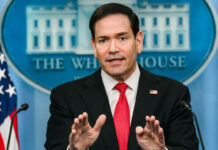
Iran school missile strike questions resurfaced on Wednesday after U.S. President Donald Trump said it remains unclear who was responsible for the deadly missile attack on a school in Iran, arguing that the chaotic conditions at the time make it difficult to determine exactly where the strike came from.
Speaking to reporters, Trump said missiles were being fired across the region during the conflict, and he suggested the truth behind the attack may never be fully established. He also said he has not seen evidence proving that the missile was American, while describing the incident as tragic and deeply disturbing.
“I don’t know that they are ever going to solve that problem in terms of whose fault was it because there were missiles flying all over the place,” Trump said, according to Reuters. He added that the attack was “horrible,” but maintained that he had seen nothing that conclusively showed the United States was responsible.
Deadly school strike in Iran remains under scrutiny
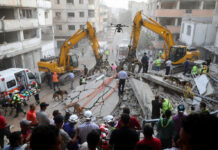
The strike in question hit a girls’ school in Minab, southern Iran, on February 28, the first day of the Iran war, and killed more than 175 children and teachers, according to Iranian officials cited by Reuters. The attack has since become one of the most controversial episodes of the conflict, drawing international condemnation and triggering scrutiny of whether U.S. forces may have mistakenly struck the site.
While your source copy mentions separate casualty figures for boys, girls, and teachers, the most widely cited international reporting on Trump’s latest remarks refers to a girls’ school in Minab and a death toll of more than 175 children and teachers, based on Iranian official accounts and Reuters reporting. Because the casualty breakdown remains sensitive and contested, it is safest for publication to attribute the broader death toll rather than present unverified sub-counts as settled fact.
Trump says no proof has linked the missile to the U.S.
Trump’s comments come as questions continue to swirl around a U.S. military investigation into the strike. Reuters previously reported that an initial internal U.S. military investigation found that U.S. forces were likely responsible for the fatal strike, though the Pentagon later elevated the probe and has not publicly confirmed any final findings.
Despite those reports, Trump has repeatedly stopped short of accepting U.S. responsibility. In his latest comments, he said the battlefield conditions were chaotic, with missiles “flying all over the place,” and suggested that assigning blame may prove impossible. He also said he did not believe the school was targeted intentionally. In earlier remarks this month, Trump said “nobody” attacked the school on purpose and described the incident as a possible wartime mistake rather than a deliberate strike.
Investigation remains politically and diplomatically sensitive
The Minab school strike has become a flashpoint in the broader debate over the U.S. role in the Iran conflict. Open-source analysts, media investigations, and reporting from multiple outlets have raised questions about whether the weapon used may have been a Tomahawk cruise missile, which would intensify scrutiny of American involvement. However, the Pentagon has not issued a definitive public conclusion assigning responsibility.
Trump initially suggested, without presenting evidence, that Iran itself may have been responsible for the strike. He later softened that stance, saying he did not know enough about the attack and would accept the results of the official investigation once completed. Reuters reported this week that Trump now says the truth may never be fully known.
Why the case matters
If a military investigation were to conclude that U.S. forces mistakenly hit the school, the incident could become one of the most politically damaging episodes of the Iran war for the Trump administration. It would also likely fuel international criticism over civilian protection, rules of engagement, and targeting practices in conflict zones.
For now, however, the key point remains that the attack is still under investigation, no final public U.S. finding has been released, and Trump is continuing to dispute the idea that clear proof already exists linking the strike to American forces.
As a result, the Iran school missile strike remains not only a humanitarian tragedy but also a politically explosive unresolved case — one that continues to cast a shadow over U.S. military conduct in the region.