New Delhi — May 16, 2026
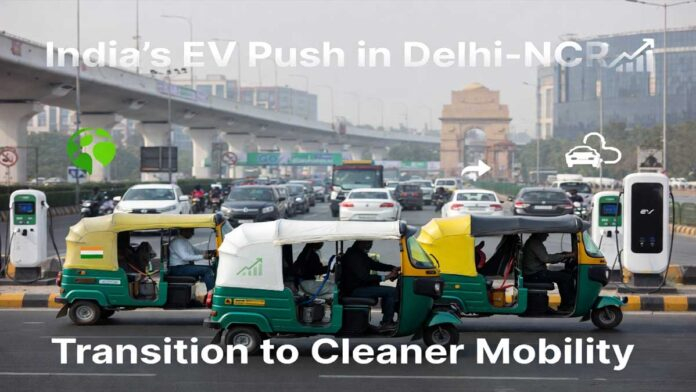
The Commission for Air Quality Management (CAQM) has announced that only electric three-wheelers will be allowed for new registrations in Delhi beginning January 1, 2027, as authorities intensify efforts to reduce air pollution across the National Capital Region.
The decision is part of a phased clean mobility strategy aimed at cutting harmful PM2.5 emissions generated by conventional fuel-powered vehicles in Delhi-NCR.
Under the new directives, all new L5-category three-wheelers registered in Delhi from 2027 onward must be electric.
The rule will later expand to key NCR cities including Gurugram, Faridabad, Sonipat, Ghaziabad and Gautam Buddh Nagar from January 2028.
The remaining districts across the NCR region will implement the policy from January 2029.
States Directed to Ensure Strict Compliance
The Commission for Air Quality Management has instructed the governments of Delhi, Haryana, Uttar Pradesh and Rajasthan to ensure strict implementation of the phased electric vehicle transition plan.
According to an official order issued by CAQM Member Secretary Tarun Kumar Pithode, vehicular emissions remain a major contributor to dangerous PM2.5 pollution levels in Delhi-NCR.
Authorities believe accelerating the shift toward electric mobility will play a critical role in improving urban air quality and reducing long-term public health risks.
Fuel Ban for Vehicles Without Valid Pollution Certificates
In another major anti-pollution measure, the CAQM has ordered that beginning October 1, vehicles without a valid Pollution Under Control Certificate (PUCC) will not be allowed to purchase fuel at petrol pumps or fuel stations anywhere in Delhi-NCR.
The restriction will apply across the region as part of broader enforcement efforts to reduce emissions from poorly maintained vehicles.
Officials said the policy is expected to strengthen compliance with emission norms and discourage the operation of highly polluting vehicles.
Push Toward Cleaner Urban Transport
Delhi-NCR has been battling severe air pollution for years, particularly during winter months when PM2.5 levels frequently rise to hazardous levels.
Transportation emissions remain one of the largest contributors to poor air quality across the region alongside industrial pollution, construction dust and seasonal crop-burning smoke.
Environmental experts say the transition to electric three-wheelers could significantly reduce urban pollution because auto-rickshaws and commercial three-wheelers operate extensively across Delhi-NCR on a daily basis.
The policy is also expected to accelerate demand for electric vehicle infrastructure, battery technology and charging networks across northern India.
EV Industry Expected to Benefit
Industry analysts believe the decision could provide a major boost to India’s growing electric mobility sector.
India has been actively promoting EV adoption through subsidies, state-level incentives and clean energy policies aimed at reducing fossil fuel dependence and meeting climate commitments.
The latest CAQM directive aligns with the Indian government’s broader push toward sustainable transportation and net-zero emission goals over the coming decades.
Officials said additional implementation guidelines and operational frameworks are expected to be issued before the policy takes effect.