Dateline: Washington, D.C., United States — April 8, 2026
Trump Announces Temporary US–Iran Ceasefire With Key Condition
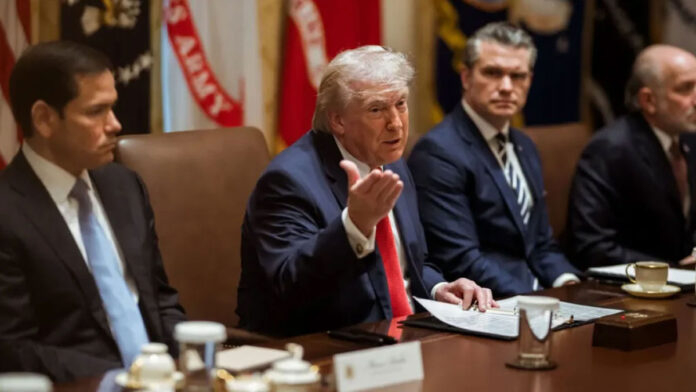
In a significant development that could ease tensions in the Middle East, U.S. President Donald Trump announced a temporary ceasefire arrangement with Iran, pausing potential military escalation for two weeks.
Trump stated that the ceasefire would be “mutual,” meaning neither the United States nor Iran would engage in offensive actions during this period. The announcement comes amid heightened geopolitical tensions and concerns over global energy security.
Hormuz Strait Reopening Set as Key Condition
A central condition tied to the ceasefire is the immediate reopening of the Strait of Hormuz—one of the world’s most critical oil transit routes.
Trump emphasized that Iran must ensure the safe and unrestricted movement of ships through the strait. The waterway has faced major disruptions in recent weeks, raising global concerns over energy supply chains.
US Claims Strategic Objectives Achieved
According to Trump, the United States has already met several of its military objectives in the region. He indicated that both sides are now working toward a broader, long-term agreement.
Trump revealed that Iran has presented a 10-point proposal, which is being reviewed as a framework for negotiations. He added that progress has been made on several longstanding issues between the two countries.
“This could be a major step toward long-term stability in the Middle East if finalized,” Trump said, signaling cautious optimism.
Background: Escalation of US–Israel–Iran Conflict
The conflict significantly disrupted maritime traffic through the Strait of Hormuz, impacting global trade and oil shipments.
Trump’s Warning and Earlier Ultimatum
Prior to the ceasefire announcement, Trump had issued strong warnings via his platform Truth Social, stating that failure to reopen the strait could lead to severe consequences.
He had previously given Iran a 48-hour ultimatum, later extending the deadline multiple times. Trump warned that U.S. forces could target Iran’s energy and infrastructure assets if conditions were not met.
In earlier remarks, he also suggested that diplomatic resolution remained possible but cautioned that failure to reach an agreement could result in decisive military action.
Outlook
The two-week ceasefire window is expected to serve as a critical period for negotiations. While both sides signal willingness to engage, the success of this initiative will largely depend on compliance with conditions—particularly the reopening of the Strait of Hormuz.
Global markets and political observers are closely monitoring developments, as any lasting agreement could reshape stability and energy dynamics across the Middle East.