Washington, D.C., United States — April 3, 2026
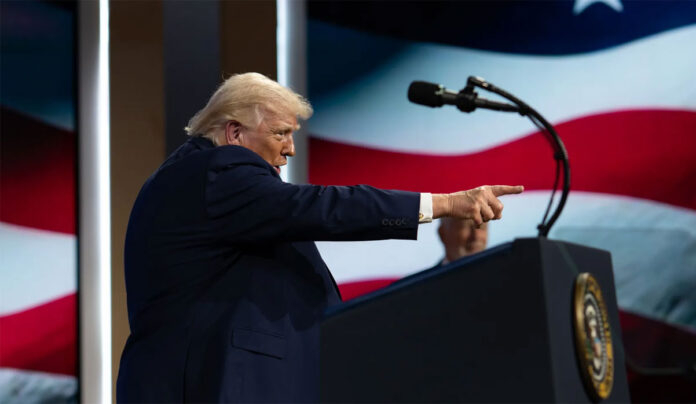
U.S. President Donald Trump has signed a sweeping executive order imposing tariffs of up to 100% on imported pharmaceutical products, marking a major escalation in Washington’s trade and industrial policy.
The directive targets foreign drugmakers that neither manufacture in the United States nor enter into pricing agreements with American companies, signaling a push to localize pharmaceutical production and reduce reliance on overseas supply chains.
Tiered Tariff Structure Targets Non-Compliant Firms
Under the new policy, companies that fail to reach pricing agreements or shift production to the U.S. will face an initial 20% tariff, which will gradually increase to 100% over four years.
Firms that comply—either by manufacturing domestically or entering pricing arrangements—will be exempt from tariffs. The administration has provided a 120- to 180-day negotiation window for companies to align with the new requirements.
Officials say the move is aimed at strengthening national security by reducing dependence on foreign-made medicines and critical pharmaceutical ingredients.
Criticism From Industry Leaders
The policy has drawn criticism from the pharmaceutical industry. PhRMA CEO Stephen J. Ubl warned that the tariffs could lead to higher drug prices for consumers and potentially discourage investment in the U.S. market.
Ubl noted that the U.S. already has a strong biopharmaceutical manufacturing base and relies largely on imports from trusted partner nations.
Additional Tariffs on Metals and Industrial Imports
In a parallel move, Trump also announced updated tariffs on key industrial imports, including steel, aluminum, copper, and related products.
The revised framework imposes:
- 50% tariffs on core metal imports
- Country-specific tariffs for products containing less than 15% metal
- 25% tariffs for products exceeding that threshold
The measures are part of a broader effort to tighten trade policies and protect domestic industries.
Policy Shift Follows Legal Setbacks
The announcement comes after the U.S. Supreme Court struck down certain earlier tariff measures in February. The administration has since pivoted to sector-specific and product-based tariffs to sustain pressure on imports.
President Trump has argued that these policies will help recover economic losses, reduce the trade deficit, and bring manufacturing back to the United States.
Global Impact and Market Concerns
While the administration frames the move as a strategic necessity, analysts warn it could disrupt global pharmaceutical supply chains and increase healthcare costs.
The long-term impact will likely depend on how quickly companies adapt to the new framework and whether negotiations lead to broader compliance.