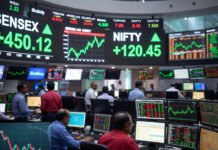
Mumbai, India – March 19, 2026
Sensex-Nifty Closing Bell: Markets End Deep in Red Amid Global Uncertainty
Indian equity benchmarks Sensex and Nifty closed sharply lower on Thursday, reflecting broad-based selling pressure across sectors and weak global cues.
The 30-share BSE Sensex dropped 2,496.89 points, or 3.26%, to settle at 74,207.24. During intraday trade, the index plunged as much as 2,753.18 points to hit 73,950.95, marking its steepest single-day fall since June 2024.
Similarly, the NSE Nifty declined 775.65 points, or 3.26%, to close at 23,002.15, slipping well below the key 23,100 level.
₹11.5 Lakh Crore Investor Wealth Eroded
The sharp sell-off significantly impacted investor wealth. According to market data, the total market capitalization of BSE-listed companies fell by approximately ₹11.5 lakh crore, dropping to around ₹427 lakh crore.
The decline was broad-based, with all Sensex constituents ending in negative territory.
Top Losers on Sensex
Among the 30 Sensex stocks, major laggards included Bajaj Finance, Mahindra & Mahindra, HDFC Bank, Larsen & Toubro, and Bajaj Finserv.
Shares of HDFC Bank fell over 5% after Chairman Atanu Chakraborty stepped down citing ethical concerns, adding to investor anxiety in the banking sector.
Gold and Silver Prices Decline
Precious metals also saw sharp declines amid global uncertainty. Silver prices dropped by ₹14,230 to ₹2.33 lakh per kilogram, while gold prices fell by ₹5,330 to ₹1.48 lakh per 10 grams.
Global Tensions Weigh on Markets
Ongoing tensions in the Middle East have heightened concerns in global markets. Attacks on key energy infrastructure, including Iran’s major gas-producing regions and a large LNG facility in Qatar, have raised fears of supply disruptions.
These developments have contributed to volatility across global financial markets.
US Fed Holds Rates, Signals Caution
The US Federal Reserve kept interest rates unchanged. However, Fed Chair Jerome Powell repeatedly highlighted “uncertainty” during his remarks, signaling potential inflation risks due to tariffs and energy disruptions.
His tone was interpreted as relatively hawkish, adding pressure on global equities.
Global Markets Also Under Pressure
Asian markets ended lower, with South Korea’s Kospi, Japan’s Nikkei 225, Shanghai’s SSE Composite, and Hong Kong’s Hang Seng all closing in the red.
European markets also witnessed heavy selling, while US markets had already recorded significant losses in the previous session.