Mumbai | January 29, 2026
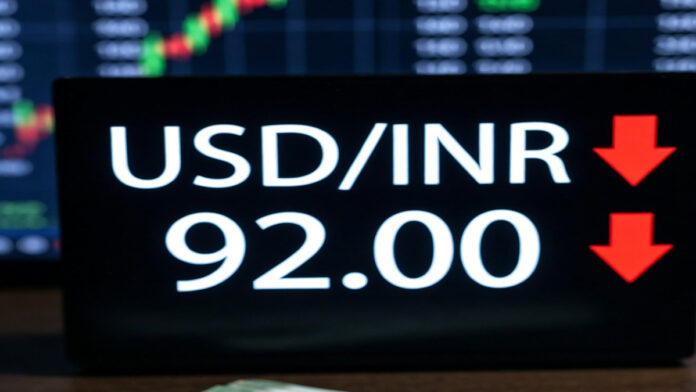
The Indian rupee suffered a sharp setback on Thursday, sliding to its all-time low of 92.00 against the US dollar in early trade. Persistent demand for the greenback, weakness across Asian currencies, and a cautious global market environment continued to exert pressure on the domestic currency.
In the opening session, the rupee breached previous record levels as the dollar strengthened globally, prompting investors to move toward safer assets amid heightened uncertainty.
Why Is the Rupee Falling?
Market participants attribute the rupee’s decline primarily to the broad-based strength of the US dollar and sustained weakness in other Asian currencies. As the dollar gains momentum in global markets, emerging market currencies have come under increased pressure, with the Indian rupee among the worst affected.
Traders also pointed to cautious risk sentiment worldwide, which has reduced appetite for emerging market assets and boosted demand for the dollar.
Rupee Performance So Far This Year
So far this year, the rupee has weakened by nearly 2% against the US dollar. The pressure has intensified in recent months following steep tariffs imposed by US President Donald Trump on Indian exports, after which the rupee has fallen by around 5%.
Analysts say trade-related uncertainty, coupled with capital outflows and elevated dollar demand from importers, has contributed to the currency’s sharp decline.
Outlook Remains Cautious
With global markets remaining volatile and the dollar continuing to find support from safe-haven flows, currency experts expect the rupee to stay under pressure in the near term. Investors are closely watching developments in global trade policy, US economic data, and central bank signals for cues on the next move in the foreign exchange market.