New York, United States — May 25, 2026
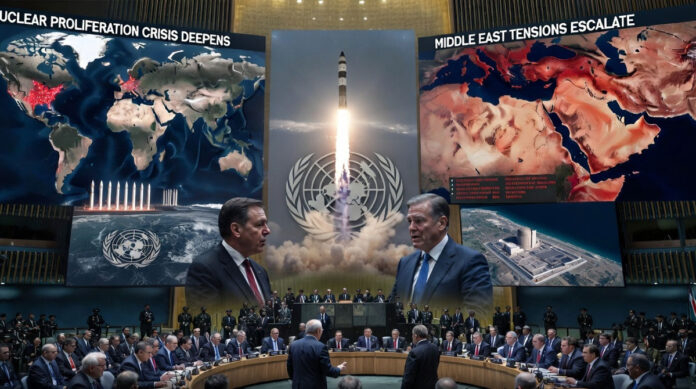
NPT Review Conference 2026 concluded without a final agreement after deep divisions among member nations over Iran’s nuclear activities and broader geopolitical tensions prevented consensus on a joint document.
The high-level conference, held at the United Nations headquarters in New York, ended in diplomatic deadlock, marking the third consecutive failure of the Nuclear Non-Proliferation Treaty (NPT) review process to produce a meaningful consensus outcome.
The United States expressed strong disappointment over the collapse of negotiations and criticized several participating countries for allegedly failing to address what Washington described as growing nuclear risks posed by Iran.
The failure of the conference is being viewed by analysts as a major setback for global nuclear disarmament efforts and international non-proliferation diplomacy.
US Accuses Iran of Violating Nuclear Obligations
American officials used the conference to raise concerns about Iran’s nuclear program, arguing that Tehran continues to expand sensitive nuclear activities without credible civilian justification.
The US State Department accused Iran of failing to comply with rules established by the International Atomic Energy Agency (IAEA), the international body responsible for monitoring nuclear programs.
According to US officials, member nations cannot ignore repeated violations if the Nuclear Non-Proliferation Treaty is to remain effective and credible.
Washington also argued that countries violating international nuclear obligations should not be allowed to avoid accountability under global non-proliferation frameworks.
Iran has consistently maintained that its nuclear activities are intended for peaceful purposes, including energy production and scientific research.
Third Consecutive NPT Conference Ends in Failure
Conference President Do Hung Viet confirmed that member states were unable to achieve common ground on a final declaration.
This marks the third straight review conference in five-year cycles to conclude without consensus. Diplomats noted that efforts to strengthen or modernize the treaty framework have remained stalled for more than 16 years.
The next official review conference is now scheduled for 2031, raising concerns among arms control experts about the future effectiveness of the treaty.
Izumi Nakamitsu also described the outcome as deeply concerning, warning that growing geopolitical divisions are weakening international disarmament efforts at a time of rising global instability.
Why the NPT Matters to Global Security
The Nuclear Non-Proliferation Treaty remains one of the most significant international agreements aimed at preventing the spread of nuclear weapons.
The treaty is built around three central goals:
- Preventing the spread of nuclear weapons
- Promoting peaceful use of nuclear energy
- Advancing global nuclear disarmament
Security analysts warn that continued failures within the NPT review process could undermine confidence in the global non-proliferation system and increase strategic tensions between major powers.
The collapse of the latest conference comes amid growing concerns over nuclear modernization programs, regional conflicts, and deteriorating diplomatic relations between global powers.
Hezbollah Activity Adds to Middle East Instability
Alongside concerns over Iran’s nuclear program, rising tensions in Lebanon have added another layer of geopolitical uncertainty.
US Secretary of State Marco Rubio strongly criticized the militant group Hezbollah, accusing it of attempting to destabilize Lebanon’s democratic government.
According to Rubio, Hezbollah has repeatedly rejected ceasefire proposals and continues to move fighters and weapons into southern Lebanon for attacks against Israel.
The United States said it remains firmly supportive of Lebanon’s internationally recognized government and warned against allowing militant organizations to undermine the country’s political stability.
Global Markets and Diplomats Closely Monitoring Developments
The simultaneous escalation of nuclear tensions involving Iran and security instability in Lebanon has intensified concerns across diplomatic and financial circles.
Analysts say continued instability in the Middle East could affect:
- Global oil markets
- International security alliances
- Regional military tensions
- Nuclear diplomacy efforts
- Global trade and energy supply chains
Diplomats warn that without renewed dialogue and international cooperation, geopolitical divisions could deepen further in the coming years.
Uncertain Future for Nuclear Diplomacy
The collapse of the NPT Review Conference 2026 highlights the growing difficulty of achieving international consensus on nuclear security issues amid rising geopolitical rivalries.
With no agreed roadmap for strengthening the treaty and growing tensions in the Middle East, experts fear the world may be entering a more unstable phase of nuclear diplomacy and regional conflict.
As global powers continue to disagree over Iran, disarmament policy, and regional security, attention will now shift toward future diplomatic efforts aimed at preventing further escalation.