San Francisco, USA — January 27, 2026
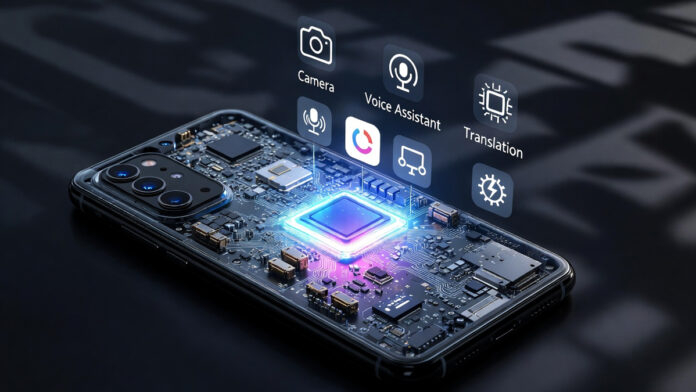
On-device AI has emerged as one of the most transformative technological shifts in smartphones and smart devices in 2026, allowing advanced artificial intelligence models to operate directly on devices without internet connectivity. This evolution is redefining user privacy, performance, and efficiency across the consumer tech ecosystem.
Unlike traditional cloud-based AI, on-device AI processes data locally using powerful hardware components such as Neural Processing Units (NPUs), eliminating the need to send sensitive data to external servers.
Internet Dependency Ends With Offline AI
One of the biggest advantages of on-device AI is its offline functionality. Tasks like photo editing, live language translation, voice commands, and real-time video processing can now be executed entirely on the smartphone.
Modern devices are equipped with high-performance NPUs that enable AI features to function seamlessly without mobile data or Wi-Fi, making AI more accessible and reliable even in low-connectivity environments.
Privacy-First AI Becomes the New Standard
With rising concerns around data security, privacy has become a defining factor in AI adoption. Since on-device AI processes personal data—such as voice inputs, facial recognition, and private messages—locally, the risk of data leaks or unauthorized access is significantly reduced.
In 2026, privacy is a top priority for users and regulators alike, and on-device AI is widely regarded as the most robust solution to safeguard personal information.
Improved Battery Life and Power Efficiency
Cloud-based AI requires continuous data transmission, which consumes considerable battery power. On-device AI minimizes this drain by processing tasks locally.
According to industry estimates, smartphones using on-device AI have recorded a 15–20 percent improvement in battery life, offering longer usage without compromising performance.
Zero Latency Delivers Instant Responses
Latency has long been a limitation of internet-dependent AI. On-device AI eliminates this delay, delivering real-time, instant responses.
Use cases include:
Live background removal during video recording
Real-time language translation during calls
Instant image enhancement and voice recognition
These features now operate with near-zero latency, even without network access.
Key Devices Driving On-Device AI in 2026
Smartphones:
Apple’s A19 chipset and Qualcomm’s Snapdragon 8 Gen 5 are capable of running AI models with over 10 billion parameters directly on the device, marking a major leap in mobile computing.
Smart Wearables:
Advanced smartwatches can now analyze health metrics such as ECG, stress levels, and sleep patterns independently, providing instant feedback without relying on a connected smartphone.
Edge Devices:
Smart home cameras and security systems now feature built-in AI for on-device facial recognition, enhancing speed, accuracy, and privacy.
Conclusion
In 2026, AI is no longer just software—it has become an integral part of hardware design. On-device AI represents a future that is faster, safer, more private, and more energy-efficient, fundamentally changing how users interact with their devices.