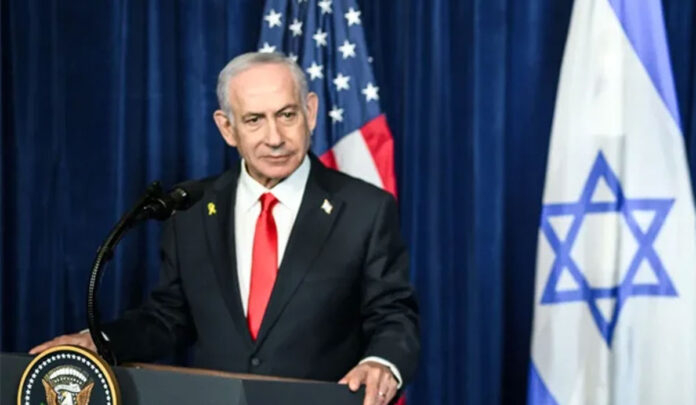
Jerusalem, Israel — April 8, 2026
A newly announced ceasefire between the United States and Iran has triggered diplomatic confusion, after Benjamin Netanyahu clarified that the agreement does not extend to Lebanon—contradicting earlier claims by Shehbaz Sharif.
The clarification follows an announcement by Donald Trump, who declared a two-week pause in potential U.S. military action against Iran to allow space for negotiations.
Israel Clarifies Scope of Ceasefire
Netanyahu stated that while Israel supports the U.S.-led diplomatic initiative, the ceasefire is strictly limited to U.S.-Iran engagement and does not apply to Lebanon.
“The two-week ceasefire will not apply to Lebanon,” Netanyahu said, adding that Israel remains aligned with U.S. objectives in ongoing negotiations involving regional allies.
His remarks directly counter Sharif’s earlier statement suggesting that the ceasefire would cover Lebanon and other areas across the region.
Condition: Iran Must Reopen Strait of Hormuz
Netanyahu reiterated support for the U.S. decision to pause military action, but emphasized that the ceasefire depends on Iran reopening the Strait of Hormuz.
He called for Iran to immediately allow safe maritime passage and halt all attacks against the United States, Israel, and regional partners.
Broader Security Concerns Highlighted
The Israeli prime minister also stressed that long-term peace efforts must ensure that Iran does not pose a nuclear, missile, or security threat to the region or the wider international community.
Israel, he said, supports U.S. efforts to secure guarantees that address these concerns as part of any future agreement.
Sharif’s Statement Sparks Confusion
Earlier, Pakistan’s Prime Minister Shehbaz Sharif had stated that a broader ceasefire agreement had been reached involving Iran, the United States, and their allies—including Lebanon.
Sharif welcomed what he described as a “visionary step” and even invited representatives from both sides to Islamabad on April 10 for further negotiations aimed at a comprehensive agreement.
However, Netanyahu’s clarification has effectively contradicted that assertion, narrowing the scope of the ceasefire to a more limited diplomatic framework.
Diplomatic Outlook
The two-week ceasefire window is now seen as a critical opportunity for negotiations between Washington and Tehran. However, differing interpretations among global leaders highlight the fragile and complex nature of the situation.
With tensions still high across multiple fronts, the success of diplomatic efforts will depend on clear coordination and adherence to agreed conditions—particularly regarding maritime security and regional stability.