Uttarkashi, Uttarakhand — May 9, 2026
A spiritual and symbolic call for access to Kailash Mansarovar echoed through Uttarkashi on Friday as the Kailash Mukti Yatra, led by Supreme Court advocate Virendra Rawat, received a warm welcome from local leaders, BJP office-bearers, and state movement activists. The yatra, which began in Delhi on May 7, has drawn devotees and supporters from multiple states and has now become a rallying point for those demanding easier and faster access to the sacred Himalayan pilgrimage region.
The timing of the procession comes at a sensitive moment. India’s Ministry of External Affairs has announced that the Kailash Manasarovar Yatra 2026 will run from June to August, with routes planned through Uttarakhand via Lipulekh Pass and Sikkim via Nathu La Pass. The issue remains politically charged after Nepal objected to the Lipulekh route, while India rejected Kathmandu’s territorial claims and described the route as longstanding.
A religious journey with a political message
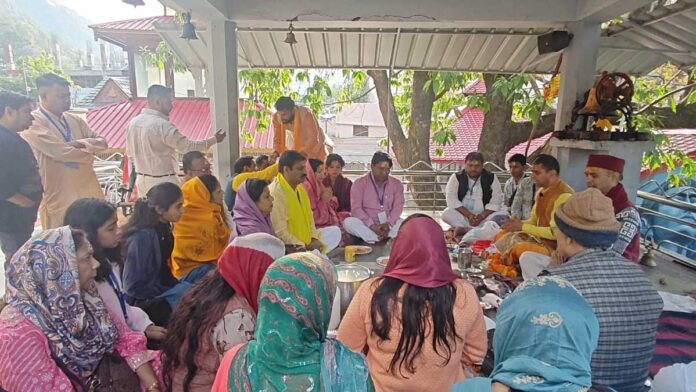
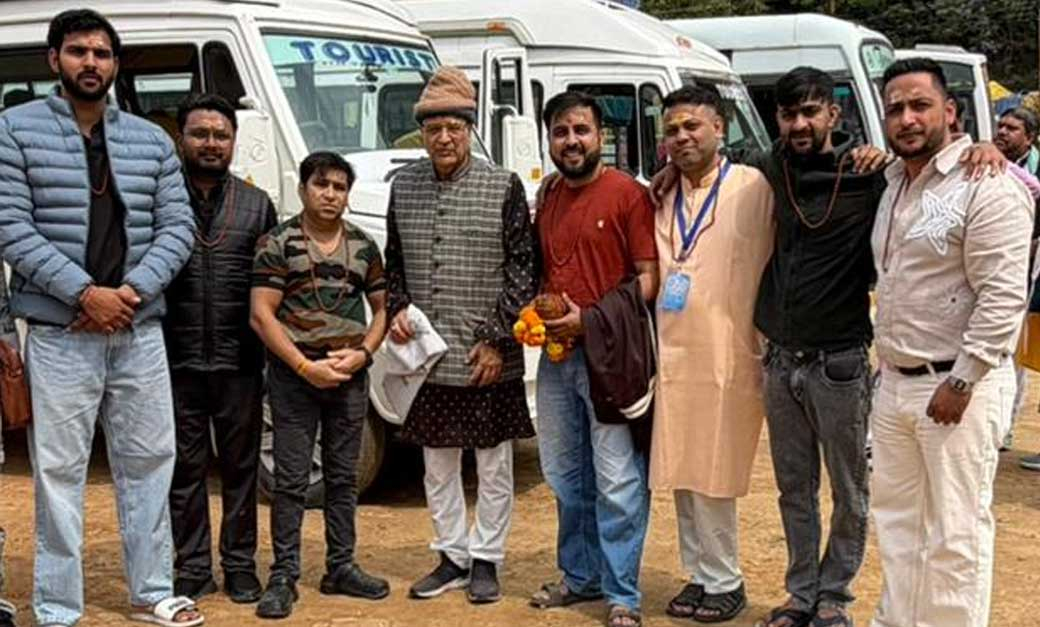
What made the Uttarkashi stop especially notable was the tone of the welcome. At the Kashi Vishwanath Temple complex, local BJP district president Nagendra Singh Chauhan, district general secretary Mahavir Singh Negi, and senior activists greeted the traveling devotees. Representatives of the Chinhit Rajya Andolanakari Samiti Uttarakhand and RSS veteran Gulab Singh Negi were also present, turning the gathering into a blend of religious devotion and civic assertion.
Supporters repeatedly raised the slogan: “Kailash ko mukta karaye Bharat sarkar” — a direct appeal to the central government to help secure open and uninterrupted access to Mount Kailash and the Kailash Mansarovar route for Hindu pilgrims.
The yatra participants say their campaign is not only about faith, but also about dignity, access, and national pride. By carrying the tricolor and chanting “Har Har Mahadev,” they tried to present the pilgrimage as a peaceful but determined public message rooted in devotion.
From Delhi to Chamba, then on to Gangotri
According to the organizers, the journey started in Delhi on May 7, 2026, and by the time it reached Chamba in Tehri it had already brought together hundreds of Shiva devotees from five states. From there, the convoy moved deeper into Uttarakhand’s Himalayan belt, where the momentum only grew stronger.
Gangotri, one of India’s most sacred pilgrimage destinations, became the next focal point. Officially, the temple town is part of the Garhwal Himalayas in Uttarkashi district, and Uttarakhand Tourism describes it as one of the highest pilgrimages in India.
The yatra’s symbolic halt in Gangotri was deliberate. For devotees, the site is not just a destination; it is a spiritual threshold. From there, participants said they planned to move toward Gartang Gali and Bhairav Ghati, before visiting Nelang Valley and the India-Tibet border area to perform a ceremonial prayer for the motherland.
Rituals, vows, and the final leg of the journey
On May 8, the travelers held a Rudrabhishek and yajna at Shri Vishwanath Temple and took a formal vow for the liberation of Kailash. The next stage, according to the organizers, was set to include visits to the more remote Himalayan points that underline the geography of India’s northern frontier.
For many participants, the journey was as much about inner devotion as it was about a larger civilizational appeal. They said the goal is to persuade the Indian government to engage China diplomatically and push for a Kailash Mansarovar corridor that would make the pilgrimage easier, safer, and more regular for Hindu devotees.
That demand has gained added resonance this year because of the renewed official Kailash pilgrimage schedule. The MEA has said the 2026 yatra will be conducted in coordination with China, with 10 batches of 50 pilgrims each through Uttarakhand and 10 batches through Sikkim, underscoring the scale of the annual arrangement.
Why the message is drawing attention
The Kailash issue has long carried religious, emotional, and geopolitical weight. For many Hindus, Mount Kailash is the abode of Lord Shiva, and access to the sacred region has often depended on diplomatic conditions, weather, and border arrangements. The recent India-Nepal dispute over the Lipulekh route has once again pushed the pilgrimage into the center of public debate.
Against that backdrop, the Kailash Mukti Yatra has emerged as a visible expression of public sentiment. It combines temple rituals, national symbols, and a call for policy action — a rare mix that has helped the campaign attract attention far beyond Uttarkashi.
For supporters, the message is simple: devotion should not be blocked by distance, paperwork, or geopolitics. And for now, their journey from Delhi to Gangotri has ensured that the call for a Kailash corridor is being heard loudly in the hills of Uttarakhand.
Key Takeaway
The advocate Virendra Rawat-led Kailash Mukti Yatra has turned into a high-visibility religious and political appeal, demanding a smoother route for Kailash Mansarovar pilgrims as India’s official 2026 yatra season approaches.