Tokyo, Japan — January 27, 2026
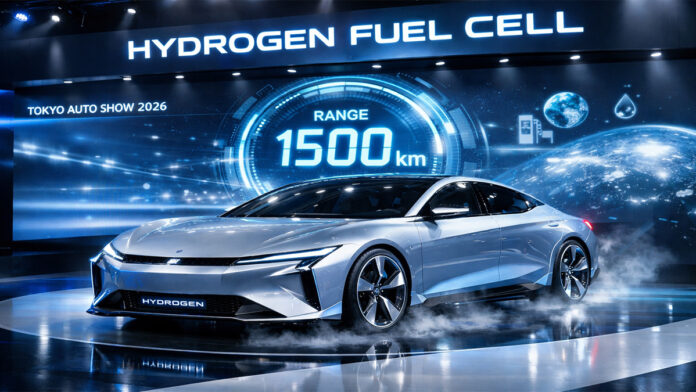
A Japanese startup has unveiled a hydrogen-powered car prototype at a major auto exhibition in Tokyo, drawing widespread attention for its claim of a 1,500-kilometer driving range and zero tailpipe emissions, potentially reducing reliance on petrol, diesel, CNG, and other fossil fuels.
The prototype was presented at events associated with the Tokyo Auto Salon 2026 and is based on what the company describes as solid-state hydrogen technology. According to developers, the vehicle can be refueled in just 3 to 5 minutes and emits only pure water vapor during operation.
🚗 What the Prototype Claims
Company officials said the hydrogen-powered vehicle uses a fuel cell system that converts hydrogen into electricity, which then powers an electric motor. The claimed range of 1,500 km on a single refuel would significantly exceed that of most current electric and hydrogen vehicles, though the figures are based on prototype-level testing.
The startup stressed that the car is not yet commercially available and remains under development.
⚠️ Clarifying the “Water-Powered Car” Claim
Experts caution against the widespread description of such vehicles as “water-powered cars.” These vehicles do not run directly on water (H₂O). Instead, they use hydrogen gas, which may be extracted from water through industrial processes such as electrolysis.
The reaction between hydrogen and oxygen inside the fuel cell generates electricity, with water vapor released as the only emission. This scientific distinction is crucial, as misleading claims about cars running solely on water frequently circulate on social media.
Well-known examples of hydrogen fuel cell vehicles include the Toyota Mirai and Honda CR-V e:FCEV.
🌍 Global Developments in Clean Mobility
The Japanese prototype comes amid rapid advancements in next-generation vehicle technology worldwide:
China-based automaker Chery has announced plans to introduce its solid-state battery vehicle Liefeng in 2026, claiming a 1,500 km range and performance in temperatures as low as –30°C.
Toyota Motor Corporation is preparing to launch its third-generation hydrogen fuel cell system in 2026, focusing on heavy commercial vehicles, with improvements in durability and cost efficiency.
Modern hydrogen vehicles already offer 3–5 minute refueling times and ranges exceeding 400 miles (640+ km) under real-world conditions.
🧪 Industry Perspective
Automotive analysts say hydrogen fuel cell technology holds long-term promise for zero-emission mobility, particularly for long-distance and heavy-duty use. However, large-scale adoption will depend on hydrogen production costs, refueling infrastructure, and independent validation of performance claims such as ultra-long driving ranges.
📌 Key Takeaway
The Tokyo showcase reflects growing momentum behind hydrogen mobility, but experts urge consumers to separate verified technology from viral exaggeration. Hydrogen cars represent a cleaner alternative to fossil fuels—but they are hydrogen-powered electric vehicles, not cars that run directly on water.