New Delhi, India — March 2, 2026
Tensions in West Asia escalated for a third consecutive day as the United States and Israel continued coordinated airstrikes on Iran, while Tehran launched retaliatory attacks. Explosions were reported in parts of Tehran and other areas across the region, intensifying fears of a broader regional conflict.
Amid rapidly changing developments, aviation services, global diplomacy, and civilian travel have been significantly disrupted.
Emirates Announces Limited Flight Operations
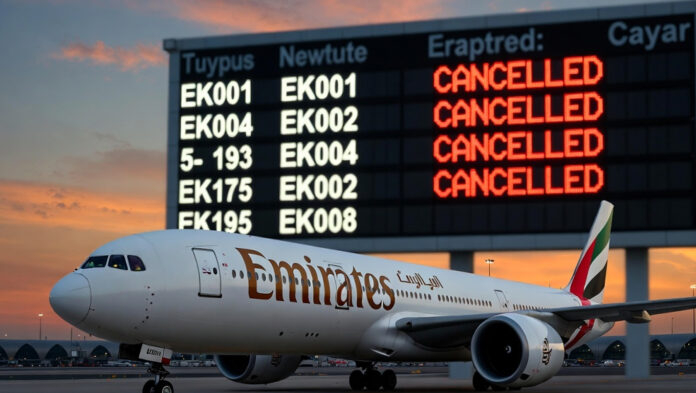
Dubai-based Emirates announced it will resume a limited number of flights beginning this evening.
In an official statement, the airline said priority will be given to passengers with existing bookings. Newly confirmed passengers will be contacted directly. Emirates urged travelers not to proceed to the airport unless they have received confirmation, adding that all other services remain suspended until further notice.
Indian Lawmaker Stranded in Dubai
The regional airspace disruptions have also affected Indian travelers. Congress Member of Parliament Kalyan Kale from Maharashtra’s Jalna constituency is currently stranded in Dubai.
According to his brother Jagannath Kale, the MP had traveled to Dubai with friends and was scheduled to return to India on March 3 via Abu Dhabi. However, flight cancellations linked to rising tensions have delayed his return.
Family members confirmed that he is safe, and the Indian Embassy has been informed.
Pakistan Cancels Over 500 Flights
The military escalation has significantly disrupted Pakistan’s aviation network. More than 500 domestic and international flights have been canceled over the past three days, affecting thousands of passengers.
Major cities including Lahore, Karachi, and Islamabad saw cancellations of flights to Gulf destinations. At present, only limited flight operations to Saudi Arabia are continuing.
Cargo services have also been impacted, raising concerns over supply chain disruptions for essential goods.
US Issues Lebanon Travel Alert
The United States Department of State issued an advisory urging American citizens not to travel to Lebanon amid worsening security conditions.
The US Embassy in Beirut advised Americans currently in the country to depart immediately while commercial flights remain available. Officials described the security situation as unstable and unpredictable, particularly in southern Lebanon, the Bekaa Valley, and parts of Beirut.
Military Base Access Denied in Europe
Spain declined a request allowing the United States to use its military bases for operations related to the ongoing conflict. The United Kingdom had earlier taken a similar stance, signaling diplomatic sensitivities as the conflict broadens.
Indian Crew Member Killed in Oman Tanker Attack
In a separate development, a tanker named MKD Vyom was attacked approximately 52 nautical miles off the coast of Muscat, Oman, using an explosives-laden unmanned boat.
According to Oman’s Ministry of Defense, the attack caused a fire and explosion in the engine room. One Indian crew member was killed, while 21 others were safely evacuated. The Omani Navy is monitoring the vessel, and the Indian Embassy remains in contact with local authorities.
Diplomatic Outreach Continues
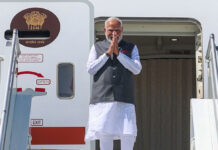
Indian Prime Minister Narendra Modi has spoken with leadership in Bahrain and Saudi Arabia amid mounting concerns over regional stability. Officials emphasized India’s commitment to peace and the safety of its citizens in affected areas.
Meanwhile, US Defense Secretary Pete Hegseth stated that the conflict is “not intended to be endless,” although no immediate de-escalation timeline has been announced.
Situation Remains Fluid
With ongoing airstrikes, flight suspensions, and diplomatic maneuvering, the situation remains highly volatile. Governments across the region are closely monitoring developments as markets and travel networks adjust to fast-evolving security risks.
Further updates are expected as events unfold.