Jerusalem / Beirut / Tehran — March 12, 2026
The escalating conflict between Iran and Israel has entered its 13th day, with rising casualties, expanding missile exchanges, and mounting concerns over disruptions to global energy supply routes.
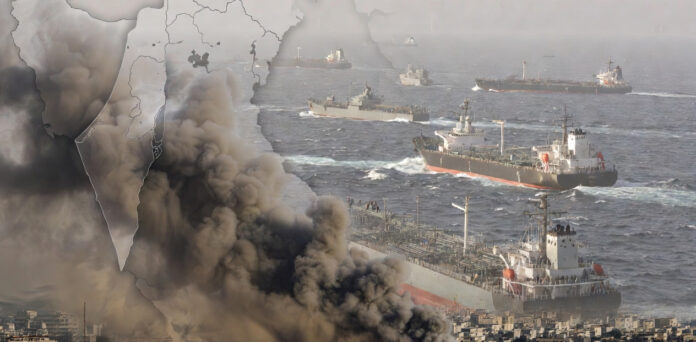
In recent hours, Israeli strikes targeting areas around Beirut have reportedly intensified, while maritime attacks near the Strait of Hormuz continue to threaten one of the world’s most critical oil shipping corridors.
The growing confrontation has heightened fears that the conflict could expand into a wider regional war across the Middle East.
Israeli Strikes in Beirut Increase Civilian Casualties
According to regional reports, Israeli air operations have targeted densely populated districts in Beirut, resulting in increased destruction and rising civilian casualties.
Over the past 24 hours, the intensity of the attacks has reportedly escalated, causing significant damage to infrastructure and residential areas.
The strikes come amid Israel’s ongoing military operations linked to the broader regional conflict.
Iran Signals Possible Escalation
Meanwhile, Iranian leadership has indicated that the country may expand its military response if Israeli operations continue.
Reports suggest that missile attacks linked to Iranian forces or allied groups have been launched in response to Israeli strikes.
Iranian officials have warned that strategic weapons capabilities could be expanded if the conflict intensifies further.
The exchange of attacks has significantly increased regional tensions.
Strait of Hormuz Attacks Threaten Global Oil Trade
One of the most alarming developments in the crisis is the continued disruption in the Strait of Hormuz, a narrow waterway through which a large portion of the world’s oil supply passes.
The Strait of Hormuz is widely regarded as one of the most important maritime oil routes globally.
Recent reports indicate:
Attacks on commercial shipping vessels
Heightened naval security patrols
Increased insurance costs for shipping companies
Several international shipping firms have reportedly rerouted vessels away from the strait, creating fears of potential supply shortages.
Analysts warn that the disruption could push global crude oil prices higher if the situation continues.
UN Calls for Immediate Ceasefire
The United Nations has urged both sides to pursue an immediate ceasefire and engage in diplomatic dialogue.
However, there have been no clear signals of de-escalation from either side.
Diplomatic channels remain active, but the ongoing attacks have complicated efforts to stabilize the situation.
Potential Impact on India and Global Markets
The crisis also carries implications for India, which relies heavily on energy imports from the Middle East.
Key concerns include:
Possible disruption in LPG and crude oil supplies
Safety of Indian citizens living in conflict-affected regions
Increased volatility in global energy prices
Economic analysts say prolonged instability in the region could affect international trade routes, shipping costs, and global markets.
Risk of a Wider Regional War
Experts caution that the next 48 hours could prove critical.
If diplomatic efforts fail and military operations continue to intensify, the confrontation could evolve into a full-scale regional conflict involving multiple Middle Eastern actors.
Such a scenario could have significant consequences for global security, energy markets, and international trade.