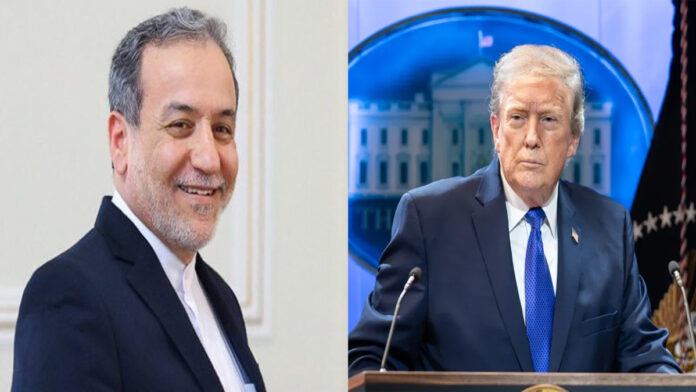
Washington / Tehran — March 16, 2026
The ongoing conflict in West Asia between the United States, Israel, and Iran has entered its 17th day, with missile and drone attacks continuing to escalate tensions across the region. As military strikes intensify, both sides have exchanged sharp accusations regarding ceasefire negotiations and the course of the conflict.
Iran’s Foreign Minister Seyed Abbas Araghchi on Sunday rejected claims made by the United States suggesting that Tehran had requested a ceasefire.
Iran Says It Never Requested a Ceasefire
In an interview with CBS News, Araghchi stated that Iran had not asked for a ceasefire or negotiations and would continue defending itself as long as necessary.
According to the Iranian foreign minister, Tehran will maintain its military operations against the United States until Washington changes its stance and acknowledges what Iran calls an “illegal war.”
“We have never asked for a ceasefire and we have not requested negotiations,” Araghchi said during the interview. “Iran will continue to defend itself for as long as required.”
Trump Accuses Iran of Spreading False Information
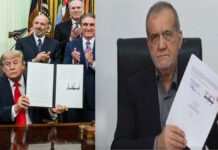
Responding to Araghchi’s remarks, U.S. President Donald Trump criticized Iran for allegedly spreading misinformation.
Trump said Iran was misleading the public and circulating false claims, particularly regarding an alleged attack on the U.S. aircraft carrier USS Abraham Lincoln (CVN-72).
According to Trump, Iran had claimed it successfully struck the carrier and caused damage. He dismissed the report as inaccurate.
“The ship was never attacked, and there was no fire or damage,” Trump said, adding that Iran was spreading false information about the incident.
Trump also alleged that some U.S. media outlets had amplified inaccurate reports despite knowing they were unverified, warning that intentionally spreading misinformation could have legal consequences.
Iran Accuses the United States of Starting an “Illegal War”
During his remarks, Araghchi accused Washington of initiating the conflict and claimed Iran’s actions were purely defensive.
He said Iran would continue its military response until the United States acknowledges that the war cannot be won militarily.
The Iranian foreign minister also ruled out immediate negotiations with Washington, arguing that trust had been damaged after U.S. strikes occurred while diplomatic discussions were ongoing.
“We see no reason to negotiate with the United States at this stage,” he said.
Iran Defends Attacks in the Gulf Region
Araghchi also defended Iran’s actions in the Gulf region, stating that Iranian forces were targeting U.S. military bases and assets, not other countries.
He added that some Gulf states hosting American military facilities had effectively enabled U.S. operations against Iran by allowing their territory to be used as bases.
Trump Earlier Said U.S. Not Ready for a Deal
In a separate interview with NBC News, Trump said that Iran was interested in reaching an agreement but that the United States was not currently prepared to finalize a deal.
According to Trump, any potential agreement would need to be “strong and comprehensive.” He indicated that Iran might need to fully abandon its nuclear program as part of any future negotiations, although he did not specify detailed conditions.
Regional Tensions Continue to Rise
As the conflict moves deeper into its third week, missile strikes, drone attacks, and military operations have intensified across West Asia. International observers continue to monitor the situation closely amid concerns that the crisis could expand further across the region.