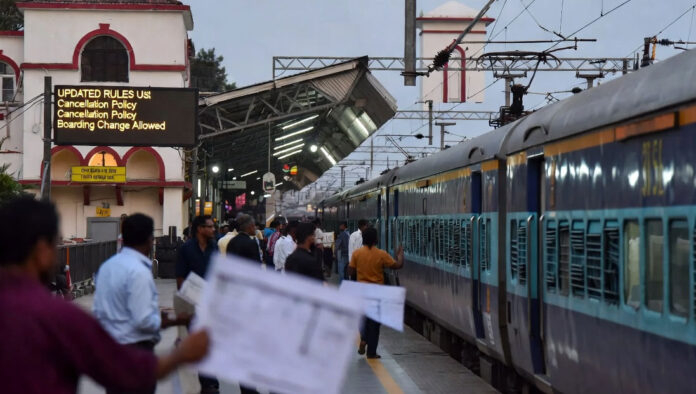
New Delhi, India — March 24, 2026
Indian Railways has introduced new ticket cancellation and boarding rules, offering more flexibility for early cancellations while imposing stricter penalties for last-minute changes.
The updated rules aim to improve seat utilization and provide relief to passengers who cancel tickets well in advance. The changes will be implemented in phases between April 1 and April 15, 2026.
New Ticket Cancellation Rules Explained
Under the revised policy, passengers who cancel their confirmed tickets early will receive higher refunds, while those canceling closer to departure will face steeper deductions.
- Before 72 hours: Maximum refund; only a flat cancellation charge per passenger will be deducted
- 72 to 24 hours: 25% of fare deducted (minimum charges apply)
- 24 to 8 hours: 50% of fare deducted (minimum charges apply)
- Less than 8 hours: No refund
The railway ministry stated that the revised structure is designed to discourage last-minute cancellations and allow better allocation of vacant seats.
Boarding Point Change Gets Easier
In a major relief for passengers, Indian Railways has relaxed rules for changing boarding stations.
Travelers can now modify their boarding point up to 30 minutes before train departure, compared to the earlier restriction of only before chart preparation.
This move is expected to benefit passengers in metro cities with multiple railway stations, allowing them to board trains from a more convenient location.
What Has Changed from Old Rules
Earlier, cancellation charges were based on class and fixed slabs, with deductions applied even for early cancellations.
For example:
- 48 hours before: Fixed charges based on class (e.g., ₹240 for Executive Class)
- 48–12 hours: 25% deduction
- 12–4 hours: 50% deduction
- Less than 4 hours: No refund
The new rules simplify the structure and offer better refunds for early planners while making last-minute cancellations more expensive.
What It Means for Passengers
The revised policy encourages passengers to plan travel more efficiently while ensuring better availability of seats for waitlisted travelers.
Frequent travelers and those with uncertain schedules may benefit from the extended flexibility, especially with the new boarding point change window.