New Delhi, India — March 10, 2026
Government Steps In to Protect Domestic LPG Supply
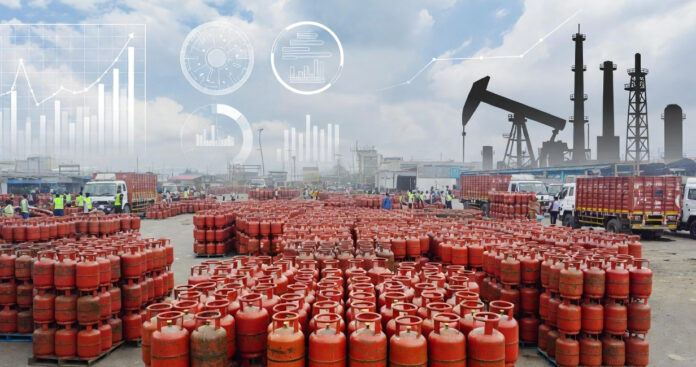
The Indian government has introduced a new priority framework for natural gas distribution to safeguard domestic energy supply amid rising global fuel pressure linked to the ongoing conflict in West Asia.
Invoking provisions under the Essential Commodities Act, the government has directed refineries and petrochemical units to increase LPG production, ensuring that cooking gas supply for households remains uninterrupted.
The move is aimed at protecting India’s domestic energy market at a time when geopolitical tensions are threatening global fuel supply chains.
New Natural Gas Allocation Framework Announced
According to the Ministry of Petroleum and Natural Gas, the newly issued control order will divert certain hydrocarbon resources into the LPG pool to strengthen domestic availability.
The government has also introduced a revised priority list for natural gas allocation, allowing authorities to better manage potential supply disruptions.
Under the new framework:
Household piped natural gas (PNG) supply will be maintained at 100 percent.
Compressed natural gas (CNG) for vehicles will also receive full allocation.
Industrial users such as the tea sector, manufacturing units, and gas grid-linked industries will receive 80 percent of their average gas consumption from the past six months.
Fertilizer plants will receive 70 percent of their average gas requirement.
To balance supply, refineries and petrochemical facilities will face a 35 percent reduction in natural gas allocation.
Energy Security Concerns Linked to Strait of Hormuz
The policy shift comes as India remains heavily dependent on energy imports through sensitive global shipping routes.
Officials noted that nearly 30 percent of India’s natural gas supply passes through the Strait of Hormuz, a key maritime corridor in the Middle East. Rising regional tensions have raised concerns about potential disruptions in the energy supply chain.
To mitigate the risk, India is also exploring alternative trade routes and supply sources for natural gas imports.
Government Forms Committee to Review LPG Demand
In addition to the allocation changes, the Petroleum Ministry has established a committee to review LPG demand across several sectors, including restaurants, automotive businesses, and other commercial users.
The committee will evaluate consumption patterns and recommend allocation strategies to ensure that critical sectors continue receiving essential fuel supplies.
Measures Introduced to Prevent Hoarding and Black Marketing
To prevent panic buying, black marketing, and hoarding, the government has introduced a 25-day inter-booking period for LPG consumers.
Officials say the step is intended to improve supply management and ensure fair distribution during periods of uncertainty in global fuel markets.
Indian Oil Focuses on Household LPG Availability
Meanwhile, Indian Oil Corporation Limited (IOCL) emphasized that it is prioritizing LPG supply for domestic consumers and critical non-household sectors, including hospitals and educational institutions.
The company stated that requests from other non-domestic sectors will be reviewed by a committee of executive directors from oil marketing companies.
This committee will evaluate allocation requests based on priority, availability, and essential service requirements.
Focus on Protecting Household Energy Supply
Government officials said the primary goal of the new measures is to ensure uninterrupted LPG availability for households despite ongoing geopolitical uncertainties.
With global fuel markets facing volatility, India’s latest policy adjustments highlight the government’s effort to strengthen energy security and maintain stability in domestic fuel supply.