New Delhi, January 25, 2026
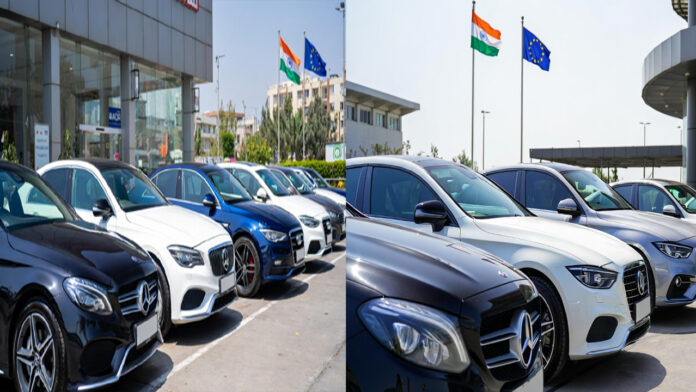
India and the European Union (EU) are reportedly on the verge of finalizing a historic free trade agreement (FTA) that would significantly reduce import duties on cars, in a move expected to reshape economic and automotive ties between the two trading partners.
According to government sources, New Delhi has agreed in principle to cut car import tariffs from the current 110% to 40%, a dramatic reduction that could be formally announced on January 27, 2026 — just one day after India’s Republic Day celebrations.
Key Elements of the Trade Deal
The proposed reduction in import duty is viewed as a major breakthrough in long-running India-EU trade talks, which have been under negotiation for several years. Under the new arrangement:
India would decrease tariffs on foreign cars — particularly those in the premium and luxury segments — from around 110% to 40%.
The tariff cut is expected to apply gradually, giving domestic and foreign automakers time to adjust.
Officials say this move is part of a broader India-EU Free Trade Agreement (FTA) framework aimed at boosting bilateral commerce across multiple sectors.
Expected Benefits for European Carmakers
A significant reduction in import duties is likely to make it easier and more cost-effective for major European automotive brands — including Mercedes-Benz, BMW, Audi and Volkswagen — to compete in the Indian market. Lower tariffs could translate into more affordable pricing for luxury and high-end vehicles in India, potentially expanding consumer choice.
Increased Competition in Indian Auto Sector
While this change could benefit European manufacturers, it may also intensify competition for Indian automakers such as Tata Motors and Mahindra & Mahindra. Analysts suggest that increased foreign vehicle imports might challenge domestic market share in certain segments.
Trade Opportunities for Indian Exports
In exchange, India is expected to secure improved access to European markets for its key exports, including:
Textiles and apparel
Agricultural products
Professional services
Reduced tariffs on these goods could boost Indian export competitiveness in the EU, strengthening trade balances.
Consumer Impact
For Indian consumers, the tariff cut could mean lower prices on imported premium cars, making luxury models more accessible than before. Industry observers believe this could stimulate stronger demand in India’s growing auto market, particularly among affluent buyers.
Expert Views
Economic experts say the tentative deal reflects India’s balancing act between:
Supporting its ’Make in India’ initiative
Attracting foreign investment
Expanding its share in global trade networks
They note that while the freer flow of goods may pressure some domestic manufacturers, it also creates opportunities for technological partnerships and joint ventures.