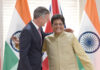
New York, November 2, 2025 — Global financial markets experienced a roller-coaster ride this week as two major stories out of Washington and Beijing dominated investor sentiment: a tentative US–China trade truce and the ongoing US government shutdown, now entering its fourth week.
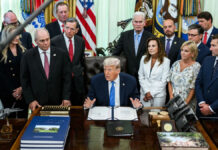
President Donald Trump hinted at lifting additional tariffs on Chinese goods — including those tied to fentanyl-related imports — if Beijing honors its commitments under the one-year trade agreement signed in Seoul last month. The comments came even as federal agencies in the US struggle to function amid one of the longest shutdowns in American history, triggered by a budget standoff between Congress and the White House.
Together, the dual developments have left investors torn between hope and hesitation.
💹 Asian Markets: Optimism Tempered by Uncertainty
Asian indices opened higher Monday following Trump’s remarks. The Shanghai Composite gained 2.1%, while Hong Kong’s Hang Seng jumped 1.8% amid renewed optimism that tariff relief could stabilize Chinese exports.
“Markets are cautiously cheering the truce,” said Chen Li, senior analyst at Guotai Junan Securities. “But traders know Trump’s promises can reverse overnight. Until concrete action follows words, volatility will persist.”
Japan’s Nikkei 225 rose 1.3%, fueled by surging tech shares and a weaker yen, while South Korea’s KOSPI advanced 0.9%, boosted by semiconductor exporters anticipating higher US demand.
However, analysts warned that the shutdown’s ripple effects on US consumption — a key driver for Asian exports — could offset gains.
“If the US slowdown worsens due to fiscal paralysis, Asia’s manufacturing recovery could stall before year-end,” said Masako Hori, an economist at Nomura Holdings.
💰 Wall Street: Rally Meets Reality
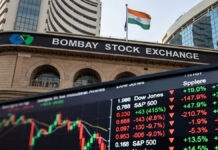
On Wall Street, the Dow Jones Industrial Average climbed 310 points (+0.9%) in early trading on Friday before trimming gains after disappointing consumer confidence data. The S&P 500 and Nasdaq Composite also posted mild advances but remained below October highs.
The rally was largely driven by technology and industrial stocks, sectors that stand to benefit most from tariff relief. Shares of Apple, Tesla, and Boeing rose between 2% and 4% on hopes of smoother supply chains with China.
Still, economists say the euphoria masks deeper anxiety.
“The trade truce headlines are good optics, but the government shutdown is eroding trust in fiscal governance,” said Megan Bryant, chief strategist at JP Morgan Asset Management. “If this drags on, market confidence will evaporate faster than tariffs can be rolled back.”
💼 European Reaction: Guarded Caution
European equities mirrored Wall Street’s cautious optimism. The FTSE 100 gained 0.7%, while Germany’s DAX edged up 0.9% as investors weighed global trade stability against fears of US economic slowdown.
The euro strengthened slightly against the dollar, reflecting investor skepticism toward Washington’s fiscal management. European Central Bank officials privately warned that prolonged instability in the US could trigger “secondary liquidity shocks” across the eurozone.
“Europe wants calm — not chaos — from Washington,” said ECB policymaker Claudia Buch. “A US fiscal crisis benefits no one, especially not when trade channels are still fragile.”
🪙 Commodities and Currencies: Mixed Signals
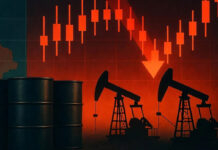
Oil prices jumped nearly 2% as traders bet on revived Chinese industrial demand following the tariff thaw. Brent crude traded at $88.70 per barrel, while WTI hovered near $84.
Gold, the traditional safe-haven asset, retreated slightly to $2,355 per ounce, signaling that risk appetite had cautiously returned. Meanwhile, the US dollar index slipped 0.4%, pressured by growing fears over Washington’s fiscal gridlock.
Cryptocurrency markets also reacted, with Bitcoin rebounding to $67,000 after a week of declines, as retail investors viewed it as an alternative hedge amid US political instability.
🧩 Trade Truce: A Fragile Pact
The US–China trade truce, brokered in Seoul and backed by South Korean mediators, hinges on China’s commitment to reduce fentanyl exports and open its agricultural markets to American farmers. In exchange, Washington pledged to suspend $120 billion worth of additional tariffs set for January 2026.
Chinese President Xi Jinping, in his first public statement on the deal, warned against “breaking global supply chains for short-term political gain.” His comments were widely seen as a subtle rebuke of Trump’s unpredictable trade tactics.
Despite the positive tone, trade experts caution that enforcement remains the Achilles’ heel of the deal.
“Both sides are in political survival mode,” said Dr. William Lee, a senior fellow at the Peterson Institute for International Economics. “This truce is less about economic peace and more about managing headlines before elections.”
🌐 Global Outlook: Volatility Ahead
For now, markets appear to be walking a tightrope between optimism and crisis. While investors welcome any sign of de-escalation in US–China tensions, the prolonged US shutdown threatens to undercut growth projections for Q4 2025.
The IMF warned last week that continued US fiscal paralysis could shave 0.3% off global GDP if it extends into December. Central banks from Tokyo to Frankfurt are closely monitoring liquidity conditions as traders brace for “whiplash volatility.”
“Investors are dancing on a fault line,” said Sophie Tran, head of macro strategy at HSBC. “A single misstep — political or economic — could send shockwaves through global markets.”