New Delhi, India | February 10, 2026
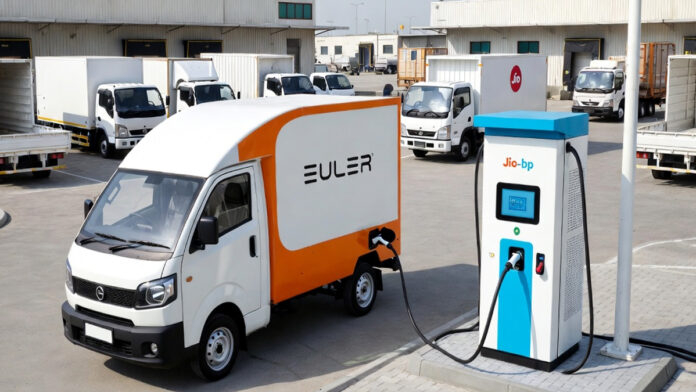
Electric commercial vehicle manufacturer Euler Motors on Monday announced a strategic partnership with Jio-bp to develop and expand electric vehicle (EV) charging infrastructure across high-demand logistics hubs in India.
The collaboration aims to address one of the biggest challenges facing electric commercial vehicles—charging accessibility—and is expected to support faster adoption among fleet operators and commercial users.
Focus on High-Demand Logistics Centers
Under the agreement, Euler Motors and Jio-bp will work together to deploy EV charging solutions at locations with heavy logistics and last-mile delivery activity. These hubs are critical for e-commerce, urban freight, and commercial transportation, where vehicle uptime and quick charging are essential.
Company officials said the partnership is designed to ensure reliable, convenient, and scalable charging access for electric commercial fleets operating in dense urban and industrial zones.
Driving Adoption of Electric Commercial Vehicles
Euler Motors stated that improved charging availability will help fleet operators transition more confidently from internal combustion engine vehicles to electric alternatives. By reducing range anxiety and downtime, the initiative is expected to make electric commercial vehicles a more viable option for logistics companies.
Jio-bp, which has been expanding its EV charging network across India, will leverage its energy and mobility expertise to support this rollout.
Strategic Push for Clean Mobility
Industry experts say partnerships like this are critical for accelerating India’s clean mobility goals, particularly in the commercial vehicle segment, which accounts for a significant share of urban emissions.
With government policies increasingly favoring electric mobility, strengthening charging infrastructure at logistics hubs could play a key role in decarbonizing last-mile and mid-mile transportation.
What This Means for Fleet Operators
Improved access to EV charging at logistics hubs
Reduced operational downtime for electric fleets
Better feasibility of large-scale EV adoption
Lower emissions and fuel costs over time
The companies said further details on rollout locations and timelines will be shared in due course.