NEW DELHI, June 9, 2026
BYD DM-i Hybrid Technology India Launch Signals New Era for Long-Range Sustainable Mobility
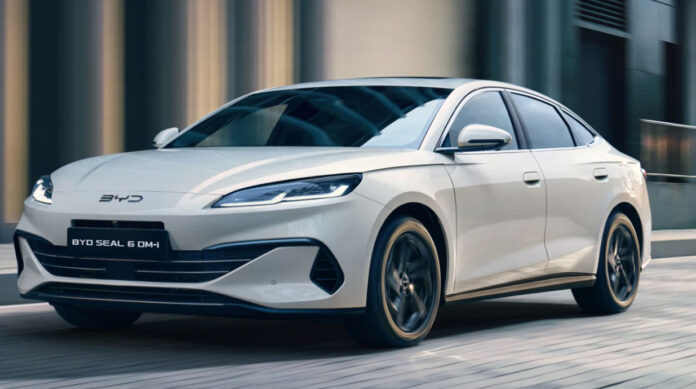
BYD DM-i Hybrid Technology India Launch marks a significant step in the Chinese automaker’s strategy to expand its footprint in India’s rapidly growing new-energy vehicle market. On Tuesday, BYD India officially showcased its globally established Dual Mode Intelligent (DM-i) plug-in hybrid technology, introducing an advanced electrified powertrain designed to combine electric vehicle efficiency with the convenience of traditional fuel-powered driving.
The company says vehicles equipped with the DM-i system will be capable of delivering a combined driving range of more than 1,200 kilometers on a single charge and fuel fill-up, potentially addressing one of the biggest concerns among Indian consumers—range anxiety.
What Makes BYD’s DM-i Technology Different?
Unlike many conventional hybrid systems that primarily rely on internal combustion engines, BYD’s DM-i platform follows an “electric-first” philosophy.
Under normal driving conditions, the vehicle operates predominantly on electric power. The gasoline engine serves a supporting role and activates primarily when additional energy, battery charging, or extended driving range is required.
This approach allows drivers to experience electric vehicle-like performance and efficiency during daily commutes while maintaining the flexibility needed for long-distance travel.
According to BYD, the technology is specifically designed to bridge the gap between fully electric mobility and traditional internal combustion vehicles, creating a practical solution for diverse driving conditions.
Advanced Powertrain Built Around Xiaoyun Engine
At the heart of the DM-i system is BYD’s 1.5-liter Xiaoyun gasoline engine, which the company claims achieves a thermal efficiency of 43.04%, placing it among the most efficient production engines in its category.
The powertrain can seamlessly switch between multiple operating modes depending on driving requirements.
EV Mode
In EV Mode, the vehicle is powered entirely by electricity stored in the battery, providing zero-tailpipe-emission driving for daily urban use.
Series Hybrid Mode
In this configuration, the gasoline engine functions as a generator, producing electricity to recharge the battery while the electric motor continues driving the wheels.
Parallel Hybrid Mode
When greater performance or higher loads are required, the engine directly contributes power to vehicle propulsion alongside the electric motor, optimizing both efficiency and performance.
This intelligent switching mechanism enables the system to maximize energy utilization while maintaining a smooth driving experience.
Performance and Efficiency Claims
BYD says vehicles equipped with the DM-i system can accelerate from 0 to 100 km/h in under 5.5 seconds, highlighting the strong performance potential of the electrified powertrain.
The company also claims fuel consumption of just 4.8 liters per 100 kilometers under NEDC testing conditions, underscoring the system’s efficiency-focused engineering.
In addition to performance and fuel economy, BYD emphasizes low noise levels and refined driving characteristics, stating that DM-i-equipped vehicles can deliver a driving experience comparable to that of a pure battery-electric vehicle.
Blade Battery Plays a Key Role
Supporting the DM-i platform is BYD’s proprietary Blade Battery technology, which has become one of the company’s most recognized innovations globally.
The Blade Battery is designed to enhance safety, durability, and energy efficiency while supporting long-term reliability. BYD has confirmed that all future DM-i models will utilize this battery architecture.
According to the company, safety, efficiency, and refinement form the core pillars of the DM-i ecosystem.
BYD’s Global Leadership in Plug-In Hybrids
BYD’s experience in plug-in hybrid technology dates back to 2008 with the launch of the F3DM, which the company describes as the world’s first mass-produced plug-in hybrid vehicle.
Since then, BYD has grown into one of the largest electrified vehicle manufacturers globally. The automaker reports cumulative sales of more than eight million plug-in hybrid vehicles worldwide and currently holds over 35% of the global PHEV market.
The introduction of DM-i technology in India reflects the company’s confidence in the country’s long-term transition toward sustainable transportation.
India Strategy Focused on New Energy Vehicles
BYD recently surpassed the milestone of 14,000 customers in India and aims to further strengthen its position in the country’s rapidly expanding new-energy vehicle segment.
The company sees significant potential for plug-in hybrid technology in India, particularly among buyers seeking lower emissions, greater efficiency, and long-distance travel capability without depending exclusively on charging infrastructure.
As India’s EV ecosystem continues to evolve, BYD expects DM-i technology to become a key component of its future product portfolio.
Executive Commentary
Rajeev Chauhan, Head of Electric Passenger Vehicle Business at BYD India, described the introduction of DM-i technology as an important milestone in the company’s mission to make sustainable mobility more accessible and versatile for Indian consumers.
According to Chauhan, the electric-first driving experience combined with seamless long-distance capability helps address several barriers to wider adoption of sustainable transportation solutions in the country.
He noted that the technology represents not only a new innovation for Indian consumers but also a smarter and more flexible pathway toward cleaner mobility.
Outlook
The launch of BYD DM-i technology in India highlights the growing importance of plug-in hybrid solutions as automakers seek to balance efficiency, performance, and practicality. With a claimed driving range exceeding 1,200 kilometers, electric-first operation, advanced battery technology, and strong global credentials, BYD’s latest offering could play a notable role in shaping India’s next phase of sustainable automotive growth.