
New Delhi, India — April 4, 2026
The Delhi Government has rolled out an aggressive anti-pollution strategy under the Air Pollution Mitigation Action Plan 2026, introducing stricter rules to curb vehicular and urban emissions.
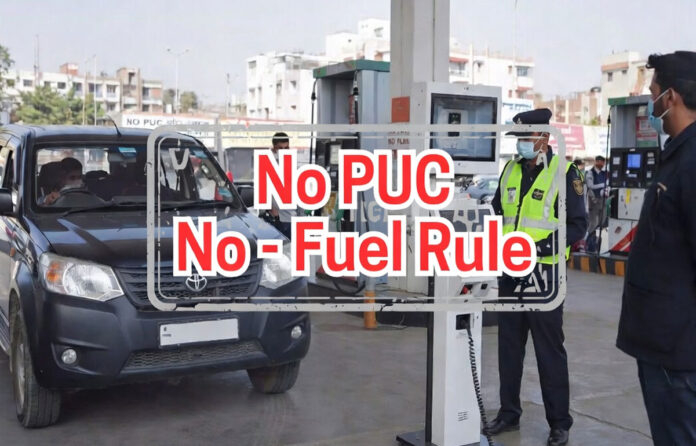
Chief Minister Rekha Gupta announced that the “No PUC, No Fuel” rule will now be enforced year-round, marking one of the toughest steps yet to tackle air pollution in the national capital.
Strict Action on Vehicles
Under the new policy, vehicles without a valid Pollution Under Control (PUC) certificate will not be allowed to refuel at petrol pumps.
To enforce this, authorities will deploy:
- Automatic Number Plate Recognition (ANPR) cameras
- Integrated digital monitoring systems
Additionally, from November 1, only BS-5 compliant, CNG, and electric goods vehicles will be permitted entry into Delhi. Non-essential heavy vehicles will face restrictions, especially during high pollution periods.
Emergency measures such as work-from-home mandates, staggered office timings, and stricter vehicle curbs may also be implemented when pollution levels spike.
Focus on Public Transport and EV Expansion
The government aims to reduce dependence on private vehicles by expanding public transport infrastructure.
Key targets include:
- Increasing bus fleet to 13,760 by 2028–29, with a major share of electric buses
- Expanding metro and regional transit connectivity
- Improving last-mile connectivity via feeder buses, e-autos, and shared mobility
To support EV adoption, the government plans to install 32,000 charging stations over the next four years, with a strong focus on two-wheelers and commercial vehicles.
Tackling Traffic and Road Dust
Traffic congestion remains a major contributor to pollution. Authorities have identified 62 congestion hotspots for targeted intervention.
Measures include:
- Intelligent Traffic Management Systems (ITMS)
- Large-scale deployment of water sprinklers
- Anti-smog guns and mist spray systems
All operations will be monitored in real time through GPS-enabled systems and centralized dashboards.
Construction and Road Dust Monitoring
The government will redevelop 3,500 km of roads to reduce dust emissions and improve maintenance systems.
An AI-driven Construction & Demolition (C&D) Portal 2.0 will enable real-time monitoring of construction activities, ensuring strict compliance with environmental norms.
Waste Management and Landfill Clearance
A timeline has been set to eliminate major landfill sites:
- Okhla: July 2026
- Bhalswa: December 2026
- Ghazipur: December 2027
Burning of biomass waste will be completely banned, with alternative solutions such as electric heating systems being promoted.
Industrial Monitoring and Tech Integration
All industrial units will be required to install online emission monitoring systems, with strict penalties for violations.
The plan also includes:
- Expansion of air quality monitoring networks
- Establishment of a “Green War Room”
- Integrated command and control centers
Public Participation and Green Cover
The government is encouraging citizen participation through platforms like the 311 app and community “Green Warrior” teams.
A massive plantation drive is also planned:
- 7 million trees in 2026–27
- Long-term goal of over 10 million plantations
Policy Impact
Officials say the plan is not just a policy document but a time-bound, technology-driven enforcement framework with clear accountability across departments.
If implemented effectively, it could significantly reduce pollution levels and transform Delhi’s environmental landscape in the coming years.