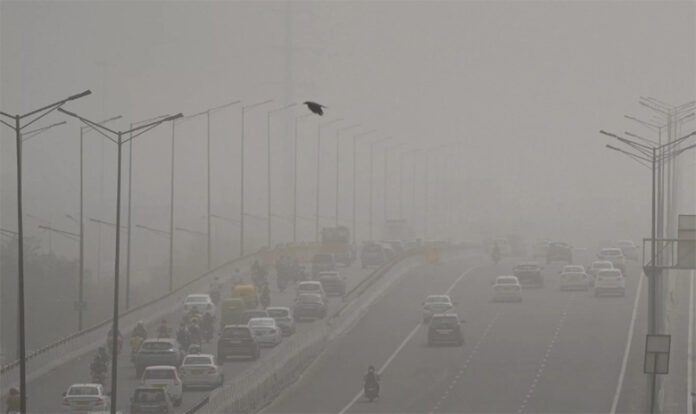
New Delhi, October 31, 2025: The national capital once again finds itself under a suffocating blanket of toxic smog, as air quality levels plunge to alarming lows. According to the Central Pollution Control Board (CPCB), Delhi’s Air Quality Index (AQI) hovered close to 400 in several areas — entering the “Severe” category.
This marks one of the worst air-quality spells this season, as authorities scramble to contain rising pollution amid falling temperatures and stagnant winds.
“It’s like breathing poison every morning,” said Anita Mehta, a schoolteacher in East Delhi, covering her face with a scarf. “We keep purifiers on all day, but the smell of smoke is still everywhere.”
🔎 Why Delhi’s AQI Is Rising
Experts attribute the worsening air to a toxic mix of local and regional factors. With the onset of cooler weather, wind speeds drop and mixing height decreases, causing pollutants to remain trapped near the surface.
Adding to the problem are stubble-burning incidents in Punjab and Haryana, as farmers clear paddy fields for the next sowing cycle. Satellite imagery from SAFAR and IMD shows hundreds of fire points across north India contributing to haze and fine particulate matter (PM 2.5).
Additionally, construction dust, vehicular emissions, and industrial output have surged post-festival season, exacerbating the city’s already toxic air.
⚠️ GRAP Stage III on the Horizon
Authorities under the Commission for Air Quality Management (CAQM) are reportedly considering enforcing Stage III of the Graded Response Action Plan (GRAP).
If implemented, Stage III would entail:
Banning construction and demolition activities (except critical infrastructure)
Restricting truck entry into Delhi (except essential supplies)
Closing brick kilns and stone crushers
Halting non-essential diesel generators
These measures are intended to cut down particulate emissions during severe smog events.
However, despite such emergency plans, long-term air-quality improvement remains elusive.
☁️ Failed Cloud-Seeding Experiment
In a desperate attempt to clear the air, Delhi’s environmental department reportedly spent ₹3 crore on a cloud-seeding experiment, hoping artificial rain could disperse pollutants.
Unfortunately, the weather conditions did not cooperate. Cloud coverage was insufficient, rendering the effort largely ineffective.
“Cloud seeding cannot be a substitute for emission control,” noted Dr. Rakesh Kumar, former head of NEERI. “We must focus on reducing pollutants at the source, not chasing temporary fixes.”
🧠 What Experts Recommend
Environmental scientists argue that sustainable mobility, urban green belts, and dust-free construction norms are key to tackling the crisis.
“Delhi’s pollution isn’t seasonal anymore,” said Sunita Narain, Director General of CSE. “It’s a year-round governance problem. We need strict enforcement and citizen accountability.”
🌡️ The Human Cost
According to a recent Lancet Countdown report, over 1.7 million Indians die annually due to air pollution. Delhi, with its population of over 30 million, bears one of the heaviest burdens.
Hospitals have reported spikes in respiratory distress cases, especially among children and elderly people.
“Every winter, admissions for asthma and bronchitis double,” said Dr. Arun Kumar, pulmonologist at AIIMS. “Children are the worst affected.”
🧭 What Residents Can Do
Authorities recommend that citizens:
Avoid outdoor exercise during morning and evening hours.
Use N95 or FFP2 masks outdoors.
Keep windows closed when AQI exceeds 300.
Opt for public transport or carpooling to reduce vehicular emissions.
Apps like IQAir, SAFAR, and CPCB’s Sameer provide live AQI data for real-time planning.
🌍 The Bigger Picture
Delhi’s battle with smog highlights a larger environmental crisis — a clash between development and sustainability. Without regional coordination and cleaner technologies, experts warn that north India’s winters may soon become unlivable.
In the words of Mahatma Gandhi:
“The Earth provides enough to satisfy every man’s needs, but not every man’s greed.”
Until the capital learns to balance both, Delhi’s winter air will remain a choking reminder of that truth.