New Delhi, India — April 26, 2026
The Aam Aadmi Party (AAP) has formally petitioned for the disqualification of seven of its Rajya Sabha members who recently defected to the Bharatiya Janata Party (BJP), setting the stage for a major legal and political confrontation.
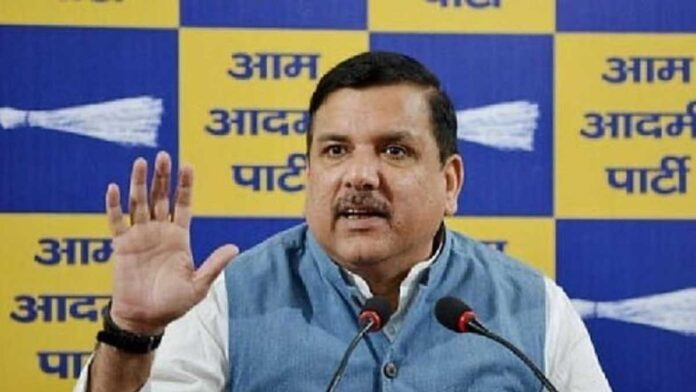
Senior AAP leader Sanjay Singh confirmed on Sunday that the party has submitted a formal complaint to the Vice President and Rajya Sabha Chairman C. P. Radhakrishnan, seeking termination of the MPs’ memberships under anti-defection provisions.
Legal Action Backed by Expert Opinion
According to AAP, the move follows consultations with leading constitutional experts. The party cited opinions from senior advocate Kapil Sibal and former Lok Sabha Secretary-General P. D. T. Achary, who reportedly concluded that the defecting MPs fall within the scope of disqualification under India’s anti-defection framework.
AAP argues that the switch to the BJP constitutes a violation of the Tenth Schedule of the Indian Constitution, which governs disqualification on grounds of defection.
Legal Debate Intensifies
The case has triggered a broader legal debate within political and constitutional circles.
- AAP’s position: The party maintains that the defections are unconstitutional and should result in immediate disqualification under the Tenth Schedule.
- Counter-argument: Some legal experts suggest that if two-thirds of a legislative group break away, it could qualify as a merger under the law—potentially protecting the MPs from disqualification.
This divergence in interpretation raises uncertainty over whether the MPs will ultimately retain their seats.
MPs at the Center of Controversy
The seven Rajya Sabha members whose status is now under scrutiny include:
- Raghav Chadha
- Sandeep Pathak
- Ashok Mittal
- Harbhajan Singh
- Rajinder Gupta
- Swati Maliwal
- Vikramjit Sahney
Reasons Behind the Defection
The MPs who joined the BJP have cited multiple reasons for their departure from AAP.
Raghav Chadha reportedly pointed to growing “disillusionment, isolation, and dissatisfaction” within the party. Others, including Vikramjit Sahney, raised concerns about governance challenges in Punjab, highlighting rising debt, agrarian distress, and drug abuse issues.
Several leaders also referred to limited access to party leadership as a contributing factor behind their decision.
What Happens Next?
The matter now rests with C. P. Radhakrishnan, who will determine the admissibility and outcome of the disqualification petition.
Political observers note that the decision could have far-reaching implications for party discipline, anti-defection jurisprudence, and the balance of power in the Rajya Sabha.